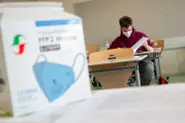
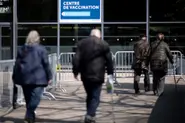
Antibodies against coronavirus remained in the blood of patients with Covid-19 for at least eight months after they were infected, Italian researchers said on Tuesday.
Sweden's 21 regions are at different stages in their vaccine programmes, but as of early May, four have begun the final phase of the rollout while others expect to open booking to the 18-59 age group within weeks.
The European Union should open its external borders to vaccinated travellers from non-EU countries, the EU Commission has proposed, but entry should be restricted if there are outbreaks of dangerous Covid variants.
Pfizer/BioNTech said on Friday it has asked European regulators to authorise its Covid-19 vaccine for 12- to 15-year-olds, a move seen as a crucial step toward achieving herd immunity.
Sweden has again postponed its Covid-19 vaccination target, this time due to a decision to halt the Johnson & Johnson (Janssen) vaccine over concerns of very rare side effects.
Denmark's bars and restaurants are again open after the country's strictest lockdown since the pandemic began. In Sweden meanwhile, they never closed, but the lifting of other restrictions has been postponed. What's happening in the two countries, and are there any lessons we could learn?
The Covid-19 infection rate has risen in Sweden week by week since the start of February, leading the Public Health Agency to renew calls for people to change their behaviour so that the country has "as few cases as possible" – at the same time as Sweden passed a milestone with two million people having received a first vaccine dose.
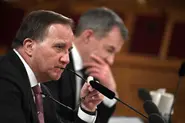
Sweden will postpone the easing of coronavirus restrictions due to a high spread of infection, Prime Minister Stefan Löfven told a press conference on Thursday.
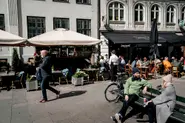
Denmark's bars, cafes, restaurants and museums reopened on Wednesday, giving life in the capital Copenhagen a semblance of normalcy as the spread of Covid-19 was deemed stable.
Several Swedish regions have reached their maximum capacity for intensive care and been forced to ask other regions for help as the continued high spread of Covid-19 is leading to more people – especially young people – requiring hospital treatment.
State epidemiologist Anders Tegnell said on Thursday there was "no sign" that the spread of infection or the rate of new Covid-19 admissions to intensive care would fall in the near future, and urged people in Sweden to follow public health advice closely.
An easing of restrictions in Denmark will reduce restrictions on people travelling out of and back to the country for business purposes, though they will still be required to quarantine when not at work.
Norway's health authority has recommended AstraZeneca be withdrawn from its Covid-19 vaccination program, but the country's government has delayed a final decision until May.
There are big differences in the strategies and organisation used by countries around Europe to vaccinate their populations against Covid-19. Here's a run down that allows you to compare the vaccination policies in place in several European countries.
Denmark’s Covid-19 vaccination programme faces significant delays following the decision by health authorities to completely withdraw the AstraZeneca vaccine from use.
Sweden on Thursday announced its spring budget proposal in full, with measures to help the healthcare sector, job market and other areas such as climate policy amounting to 45 billion kronor ($5.3 billion) in total.
Life in Switzerland usually slows down — and sometimes comes to a standstill— on Sundays and holidays. This sluggishness extends to vaccinations as well, putting in doubt the promises of health officials who vow to inoculate everyone who wants it by summer.
German tabloid Bild on Sunday compared the coronavirus situation in Germany and Switzerland, reporting that the freedoms in the latter made Switzerland a “coronavirus paradise”. But is it really?
The Swedish Public Health Agency has put the use of the Johnson & Johnson (Janssen) Covid-19 vaccine on hold pending an investigation by European health authorities.