
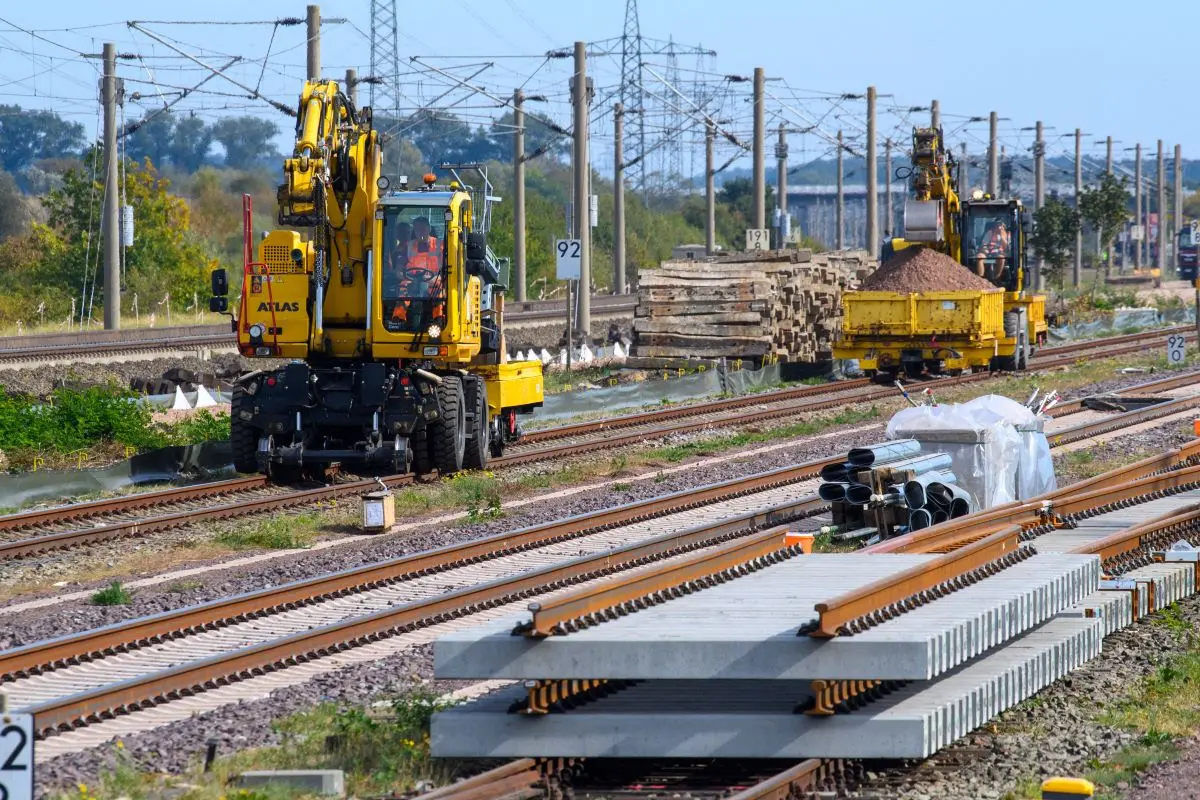
Deutsche Bahn's latest large-scale rail renovation project is under way, with the crucial Berlin-Hanover corridor closed to long-distance traffic from October 2nd.
The work is expected to continue until the end of 2027 and will affect passengers travelling between Berlin, North Rhine-Westphalia and beyond.
The project is part of a wider effort to modernise some of Germany's busiest and most heavily used rail routes in the hope of delivering a more reliable network in the long term. But for travellers already worn down by delays, the year of disruptions to come may be frustrating.
What passengers need to know
Passengers using long-distance services between Berlin and Hanover should prepare for timetable changes and longer journeys from now until the end of 2027.
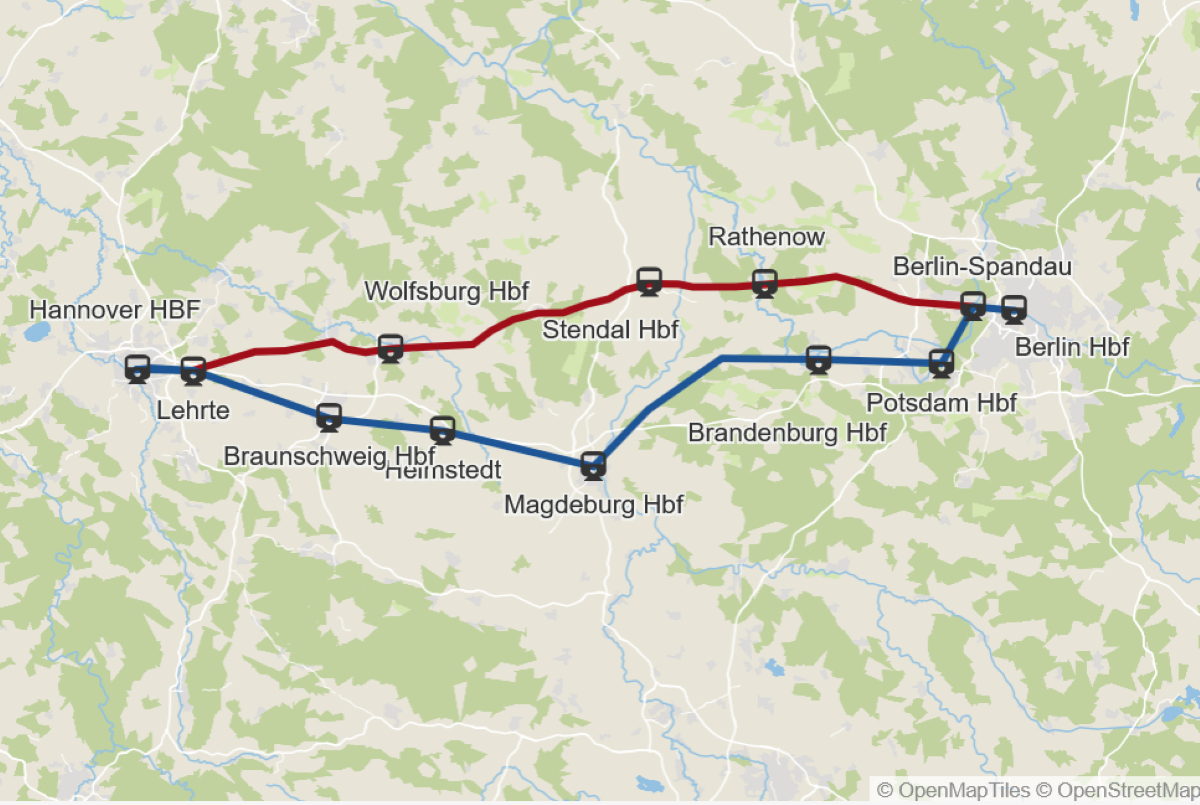
During the closure, ICE and IC trains that would normally use the direct route are being diverted via alternative lines through Braunschweig or Magdeburg, adding around 60 to 80 minutes to journey times.
The disruption extends beyond the Berlin-Hanover route itself. Direct services between North Rhine-Westphalia and Berlin will also take longer because they normally use this corridor.
READ ALSO: The app that wants to help you avoid Deutsche Bahn delays
Meanwhile, the Amsterdam-Berlin service, which runs four times a day, is being rerouted via Hamburg, increasing travel times by around 70 minutes.
In addition, passengers travelling between Frankfurt and Berlin should check their connection carefully before departure, as some services are being diverted via Fulda and Erfurt, while others will terminate at Braunschweig, and do not continue to Berlin.
Regional transport
Regional rail passengers will also face changes, although many services will continue to run. On some routes, buses will replace trains on sections affected by the construction work.
For example, passengers on the RE50 (Hildesheim-Braunschweig-Wolfsburg) and RE30 (Hanover-Wolfsburg) will need to use replacement buses on weekends between Fallersleben and Wolfsburg, while trains will continue to operate on the remaining parts of those routes.
Some areas will feel the impact more than others. Wolfsburg will lose long-distance train services during the current phase of the works (at least until the end of 2026), meaning passengers will need to use regional trains or alternative connections.
Stendal will also lose its IC and ICE stops temporarily, forcing many travellers to change trains elsewhere. Around Hanover, S-Bahn passengers should be aware that the S4 line between Hanover and Hildesheim is scheduled to be suspended throughout the 2027 timetable year.
Where replacement buses are being used, Deutsche Bahn says they will be fully accessible and equipped with Wi-Fi, USB charging points and onboard passenger information systems.
But passengers should allow extra time for journeys involving bus replacements and check the latest timetable information before travelling.
READ ALSO: Where are public transport fares set to rise in Germany in 2027?
The renovation work is being carried out in several phases and is expected to continue until December 2027. Because routes and service patterns will change as construction progresses, Deutsche Bahn recommends checking journey details through the DB Navigator app or local transport operators before every trip.
Construction noise
To speed up completion, Deutsche Bahn says construction work will take place at night and on weekends as well as weekdays.
For residents living near the route, particularly around Wolfsburg, this could mean increased noise levels. Preliminary construction activity has already been under way since September, and further periods of disruption are likely as work progresses along different sections of the corridor.
Why is the line being closed?
The closure is part of one of the largest rail modernisation projects currently taking place in Germany.
Across the corridor, hundreds of kilometres of track are being renewed, along with overhead wires, switches, signalling systems and noise barriers. Around 25 stations will be modernised, with improvements including better lighting, clearer signage and step-free access to platforms and trains.
Major renovation projects have already been completed on the 'Riedbahn' railway around Frankfurt, and on the Berlin - Hamburg line.
One of the most significant tasks involves replacing deteriorated concrete track sections around Stendal. At the same time, electrification work is continuing on the parallel Lehrter Stammbahn route.
The Berlin-Hanover project forms part of Deutsche Bahn's nationwide "general renovation" programme. Over the coming years, dozens of heavily used rail corridors are due to undergo similar upgrades. While the short-term disruption is considerable, the aim is to create a rail network that is more punctual, reliable and capable of meeting future demand.
Comments