
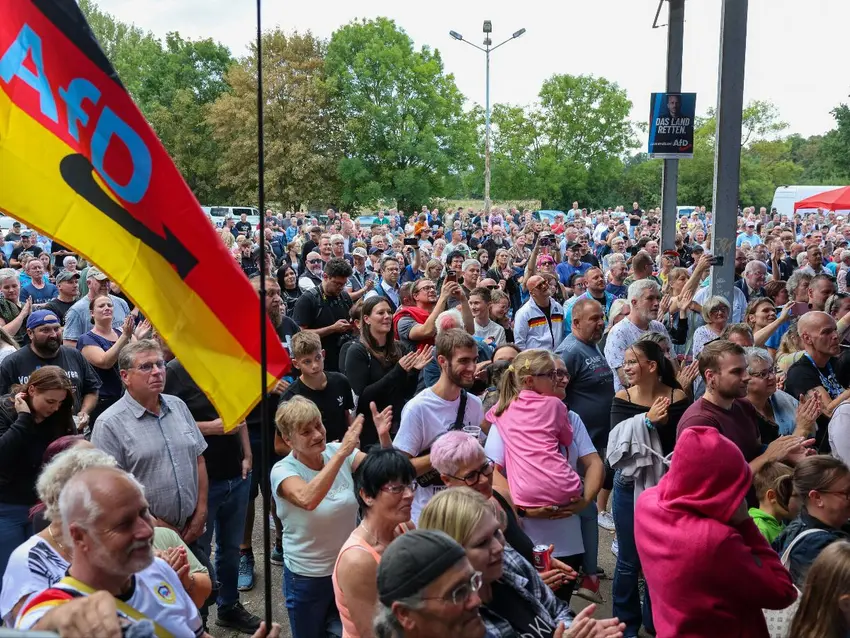
On Sunday, voters in Saxony-Anhalt, home to around 2.14 million people, will go to the polls to elect a new state parliament.
But it's far from an ordinary election, with the vote expected to send political shockwaves across Germany.
The Alternative for Germany (AfD) has been consistently polling at around 40 percent, putting it well ahead of its main rival, the centre-right Christian Democratic Union (CDU), which is hovering at around 23 percent.
The AfD, which has been classified as a right-wing extremist organisation by the state’s domestic intelligence agency, is therefore expected to emerge as the strongest force in the state parliament.
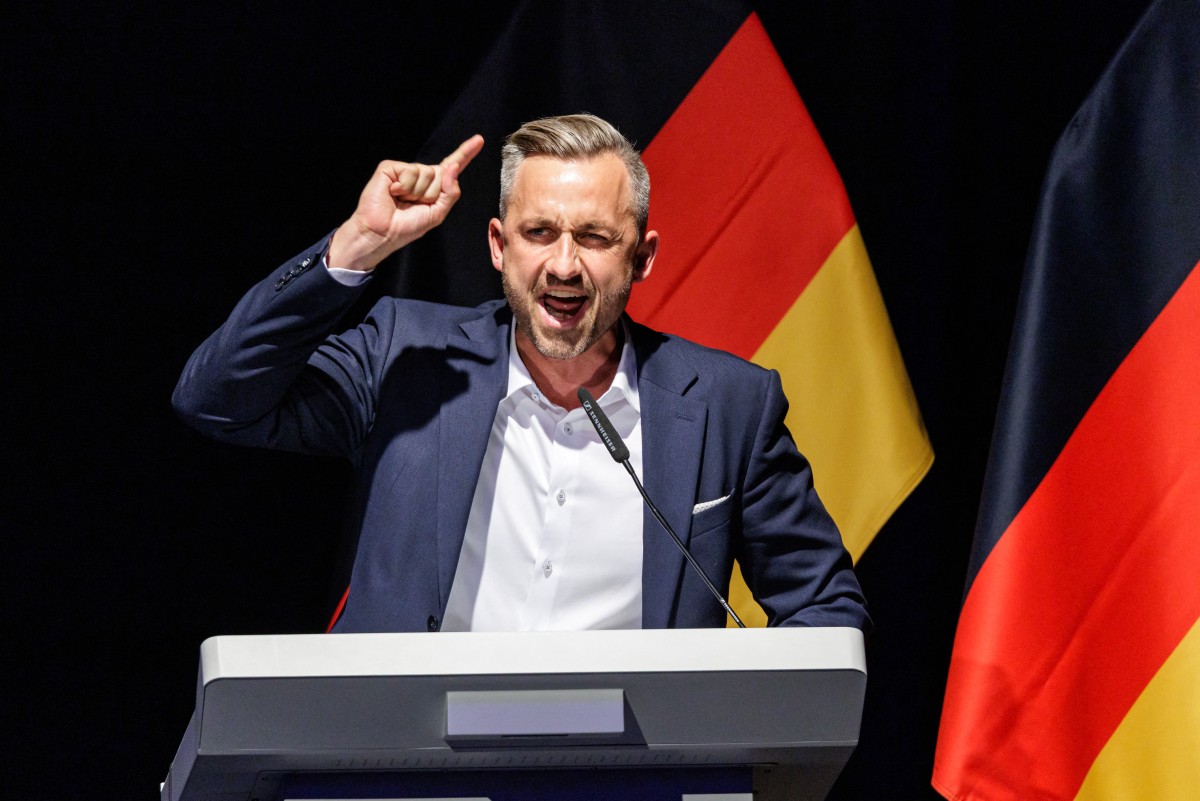
But what will happen after the vote is less certain. Could AfD lead candidate Ulrich Siegmund become the first far-right leader of a German state since the end of the Second World War? And if the AfD falls short of an absolute majority, could it still find a route into government?
We put these questions to a political scientist and a German historian to find out.
READ ALSO: The 5 big challenges facing Germany this September
Could the AfD come to power?
Experts say it's still too early to say whether the AfD will win an outright majority of seats to be able to form a single-party government.
Using research models, Lukas Stötzer, a political scientist at the University of Witten/Herdeck, calculated that the AfD has around a 30 percent chance of gaining an absolute majority in the state parliament.
He said it "heavily depends" on how other parties perform, and in particular if parties like the Greens and the BSW, can reach the five percent hurdle needed to get into parliament. The Greens are currently polling at six percent and the BSW at three percent.
"My guess is the AfD will be by far the largest party with substantial gains but they will not have an absolute majority, and that will make it really difficult afterwards," said Stötzer.
Even without a majority the AfD may find routes to power.
Historian and author Katja Hoyer, who wrote 'Beyond the Wall: East Germany 1949-1990', told The Local the outcome is "extremely hard to predict" but added: "I wouldn't sit there and think, 'Oh, they haven't got an absolute majority, therefore they're out of power for the next five years'. I don't think that's necessarily how it will pan out.
"I think the bigger potential factor here is what happens with the other CDU deputies, whether there are any among them who might think about defecting to the AfD either outright or just voting with them."
The election of Saony-Anhalt's next state premier could be particularly significant because the vote is secret.
"There wouldn't be anything to stop [CDU politicians] from saying, ‘Well, we'd rather have that than, you know, go ahead with the far-left Die Linke [left party].’ So I think that's the biggest issue there: what they will do."
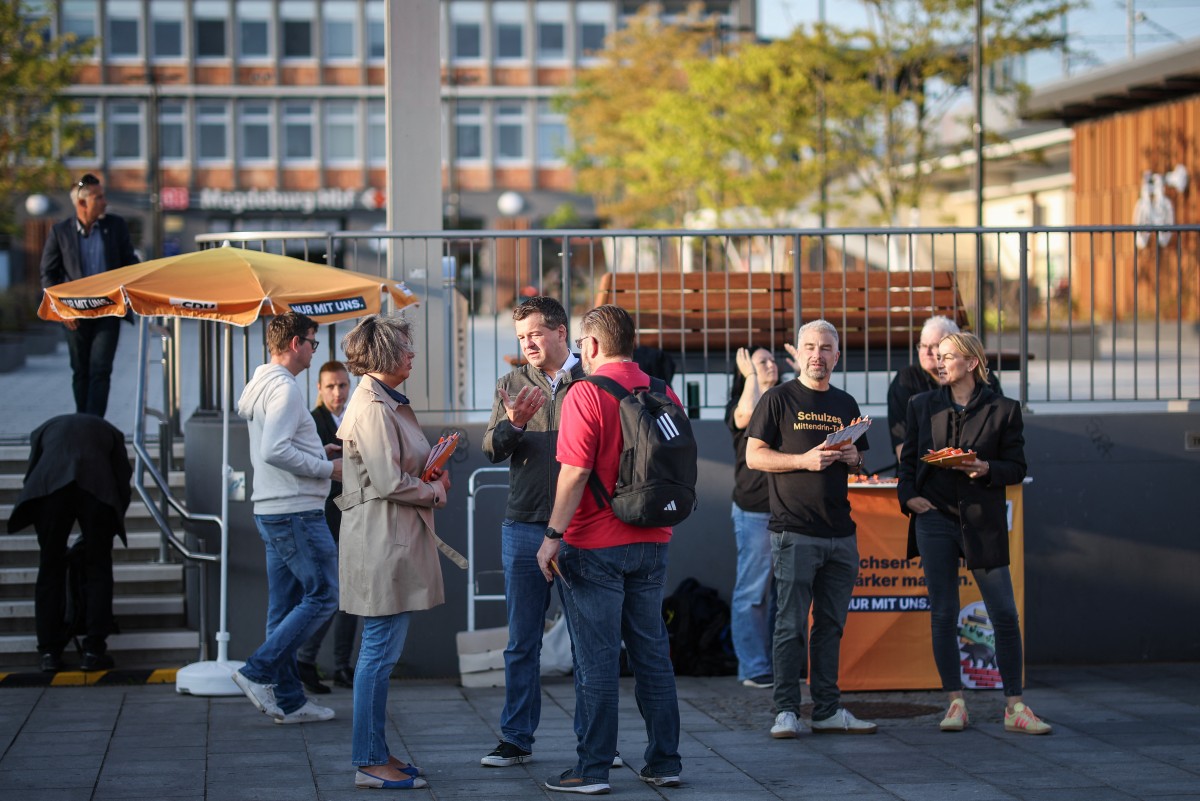
All of this would make a huge dent in the 'Brandmauer' or firewall that mainstream parties have held up in recent years to stop the far-right party from getting into power.
"I certainly think it's much more difficult to uphold now," said Hoyer, adding that the discourse around a firewall had become "much more nuanced and open" across the political spectrum.
"There's a lot more people now arguing for things like 'red lines' rather than the firewall. There's clearly a lot of thinking now around alternatives because it is beginning to look very shaky indeed."
Stötzer said parties will face a huge challenge when trying to form a coalition government in their bid to keep the AfD out.
Currently, Saxony-Anhalt is led by a coalition with the CDU, centre-left SPD and pro-business FDP. The CDU has traditionally also been against forming a coalition with the The Left, but may have to rely on their support to govern.
"We're probably going to see a minority government with the CDU, SPD, and Greens," said Stötzer. "That's a constellation that has been done before, and Die Linke will support them."
But this will spark an uproar, especially among AfD voters who will "see themselves as the winner of the election but will not be able to govern", said Stötzer.
What would an AfD-led government look like?
There is a still a possibility of the AfD winning an absolute majority which would allow it to govern alone.
Germany’s federal system gives state governments significant power when it comes to things like education, culture and policing. State governments also have influence in shaping national laws as part of the Bundesrat.
As The Local has been reporting, the AfD's radical manifesto includes plans to ramp up deportations of migrants and segregate refugee children from mainstream schools.
The party also wants to change how German history is taught in the classroom, increase birth rates among German nationals and "launch a repatriation programme" for skilled German professionals who have moved abroad.
READ ALSO: Welcome culture to farewell culture - the AfD's plans for Saxony-Anhalt
Many proposals have attracted criticism, with some measures – such as a bid to abolish the right to asylum – clearly going against Germany’s Grundgesetz (Basic Law, also referred to as its constitution) and European law.
Stötzer said the the AfD would "nonetheless try to implement these laws... even if there are fears that they might be unconstitutional".
He added: "What will happen then is that they will be taken up by the German Supreme Court, and the court will decide".
An election felt beyond Saxony-Anhalt
As an historian, Hoyer is cautious about comparisons with the Nazi era but she believes there is a historical parallel worth considering.
"I'm always uncomfortable about the Nazi comparison, but in terms of its pattern, there is a comparison to be made to Thuringia in 1930," she said.
The Nazi Party briefly entered a coalition government in Thuringia that year and took control of key departments such as the interior ministry.
Hoyer said the Nazis used those positions to make appointments that had effects beyond the government, including professors, theatre directors and police chiefs.
If they were able to go down this route in Saxony-Anhalt, Hoyer said this could "potentially lead to quite a big structural and cultural change".
Hoyer said "once they've got a foothold" in Saxony-Anhalt, it "allows them to spread their influence elsewhere".
She added: "I think that's how they see it."
READ ALSO: 'Disaster for democracy' - readers sound the alarm on election in Saxony-Anhalt
Stötzer agrees that the election results – whatever they are – have implications well beyond the state.
"They (the AfD) have such a big influence, even if they don't govern," said Stötzer.
"That's why all eyes are on Saxony-Anhalt."
Comments