
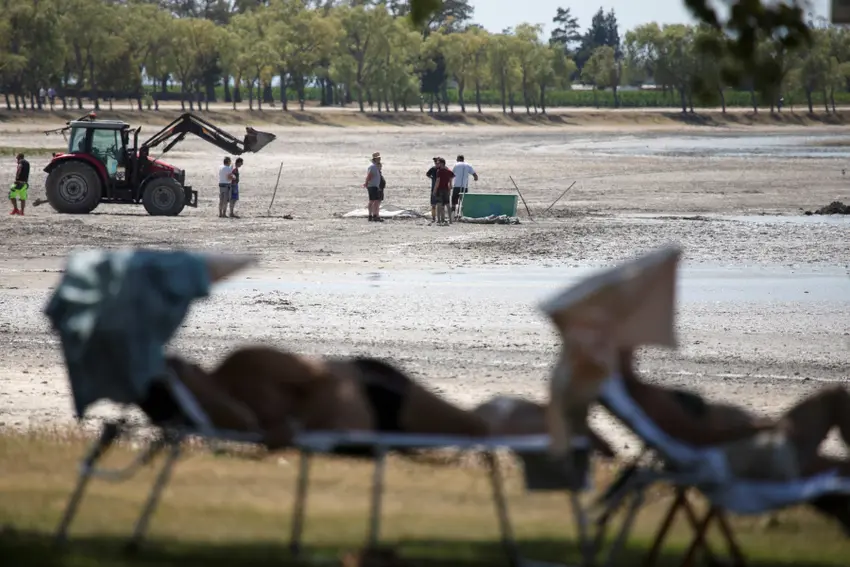
People in Austria are getting some respite from extreme heat, with temperatures under 30C along with showers.
For farmers, however, the cooler weather offers little relief. Months of heat and below-average rainfall have already inflicted severe damage on crops and pastures, with concerns growing about the impact on food production and prices.
READ ALSO: Could 40C summers become more common in Austria?
How bad is the drought in Austria?
Austria is facing what Kurt Weinberger, head of the Austrian Hagelversicherung agricultural insurer, recently described as an "historic drought disaster".
According to Weinberger, drought-related damage this year is expected to reach around €1 billion.
Crop failures have hit agricultural land across the entire country. According to insurers, losses amount to 45 percent in grassland, 25 percent for crops such as maize, soya and pumpkins, and 15 percent for cereals. In total, the loss amounts to around 30 percent of the yield value, which stands at €3.2 billion.
On average, about 60 percent of agricultural land is insured. "Every insured farm has a legal right to compensation," said Weinberger. He expects insurers to pay out €400 million of damage.
The Austrian government is also considering additional drought relief measures for farmers.
Climate crisis to blame
Experts have repeatedly warned that global warming is fuelling more extreme weather events, including extended heatwaves, droughts and wildfires.
"These extreme events are leading to unprecedented drought damage in Austria," said Weinberger.
Weinberger said the effect is clearly evident in Austria. He said the country used to see an extreme drought once every 10 years – but now it occurs every one to two years.
For comparison, while this year alone the damage is expected to amount to about €1 billion, over the past 10 years the combined total was €2 billion.
Austria is not the only country affected. The EU's Copernicus Climate Change Service last week reported that Western Europe experienced its hottest June-July on record.
READ ALSO: Europe's battle with wildfires continues
What does it mean for life in Austria?
The drought is expected to make daily life in Austria more expensive.
Poor harvests are likely to put additional pressure on the prices of some fruits, vegetables and other agricultural products later this year.
Economists say that it is difficult to predict exactly how much prices will rise; however, retail prices also depend on imports, energy and transport costs, as well as general food inflation.
As The Local has been reporting, the extended heat and drought this summer has caused major disruption to daily life – from transport to education.
READ ALSO: Will Austria's drought make groceries more expensive?
Sweltering temperatures have resulted in an increase in heat-related deaths, with the Austrian Agency for Health and Food Safety (AGES) estimating 395 excess deaths related to heat in June alone.
Water shortages are also causing problems. Some Alpine huts in Salzburg have been temporarily closed or have restricted access due to lack of water.
Looking ahead to autumn, winemakers across Europe – including Austria – are facing challenges.
In some regions of France, Italy and Germany, the grape harvest started unusually early this year.
In Austria, some winemakers have already begun harvesting grapes for sparkling wine, and are poised to start the main harvest this August instead of September.
The Austrian Winegrowers' Association anticipates a drop in yields this year.
How bad could it get?
Experts say the situation will get worse amid climate change.
Weinberger issued a warning about what current trends could mean for future food supplies.
Austria is currently 87 percent self-sufficient in cereals. However, due to extreme weather and land use, this figure could fall to 50 percent by 2060.
A similar trend is evident for maize and potatoes. "We are on the way to becoming a very vulnerable country," said Weinberger.
READ ALSO: OPINION - Austria’s hatred for air conditioning is just cultural stubbornness
Comments (1)