
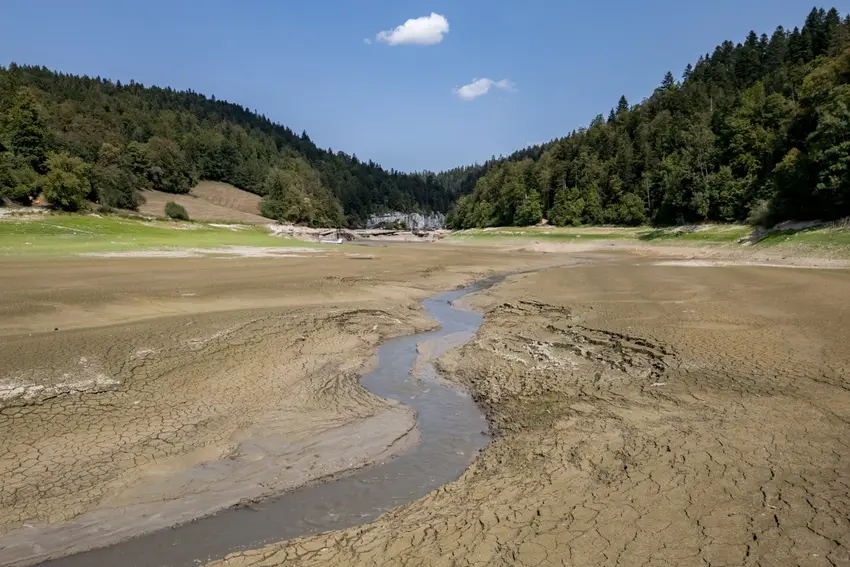
France uses nuclear power to generate around 70 percent of its electricity. The country has seen nuclear power production disrupted by multiple heatwaves and droughts this year.
According to AFP calculations based on data published by energy group EDF since 2015, 20.4 percent of generating capacity was unavailable.
Between 9.45am and 10am, EDF's nuclear fleet recorded a new peak in outages due to "environmental constraints" or "external environmental causes," both in terms of the number of reactors shut down or operating at reduced output and in terms of lost generating capacity.
In total, 13 of the 57 reactors in EDF's nuclear fleet were affected. Eight reactors were completely shut down while five were operating at reduced power.
Much of the lost nuclear generating capacity was due to full or partial shutdowns at five of the six reactors at the Gravelines nuclear power plant after a swarm of jellyfish clogged pumps used to cool the units.
Experts say overfishing, plastic pollution and warming seas due to climate change have created conditions allowing jellyfish to thrive and reproduce.
Outside the Gravelines plant, the largest in Western Europe, the shutdowns or production reductions affecting other reactors are linked to extreme heat and droughts, depriving the plants of the water they need for cooling.
It's a fairly regular event during a heatwave for the open-loop power plants - those that pump water from the rivers or the sea - to shut down or reduce power.
The rules on heat shutdowns are not about nuclear safety - they are about environmental regulations that protect nearby flora, fauna and waterways.
Any used water which is discharged back into the rivers (or sea) is usually slightly warmer than the river itself - normally around 0.2C warmer. However if the river itself is very warm due to a heatwave, the additional heat of discharged water can raise it to levels that are dangerous to local wildfire.
The exact temperature thresholds are specific to each plant and are designed to protect flora and fauna.
The other reason for shutdowns is drought - if the local river is low due to drought it can become difficult or impossible to extract the water required for cooling.
France is currently suffering a record drought with 70 percent of the country under water restrictions.
In general, heat-related shutdowns do not cause a problem for electricity capacity since energy use is lower in summer than in winter.
Most of the time, France is a net exporter of electricity and sells extra electricity produced to neighbouring countries.
According to EDF, between 2000 and 2024, nuclear production losses due to environmental causes (high temperatures and low river flows) have represented an average of 0.3 percent of annual production from nuclear power plants
READ ALSO: Why France shuts down its nuclear reactors during heatwaves
France has also seen a strong increase in its solar energy production in recent years due to major investment in solar panels. Since June France has been over-producing solar energy on most days.
Comments