
The fate of the MV Hondius has sparked international alarm after three passengers died in an outbreak of the rare virus, for which no vaccines or specific treatments exist.
Yet health officials have stressed that the global public health risk is low and rejected comparisons to the start of the Covid-19 pandemic.
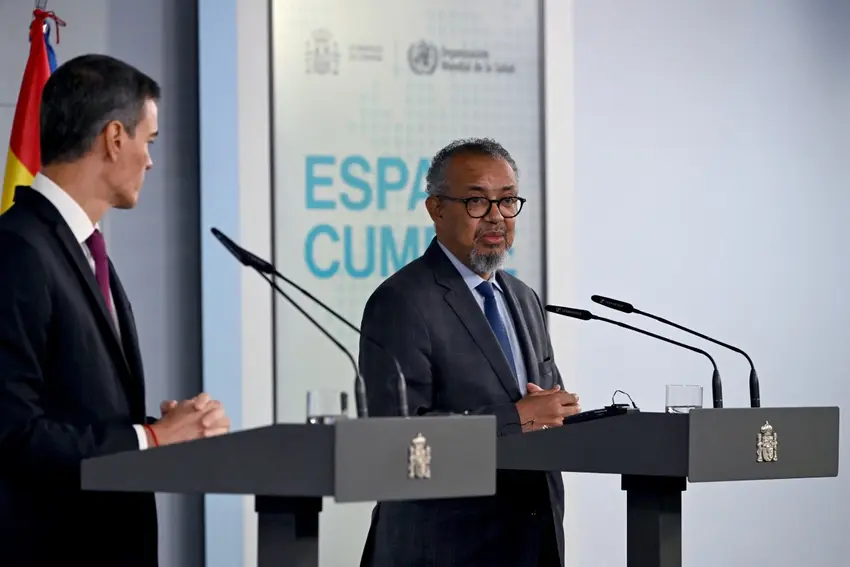
"There is no sign that we are seeing the start of a larger outbreak," Tedros told a joint news conference in Madrid with Spanish Prime Minister Pedro Sánchez.
"But of course the situation could change, and given the long incubation period of the virus, it's possible we might see more cases in the coming weeks," Tedros said.
More than 120 passengers and crew on the MV Hondius were flown out from Spain's Canary Islands on Sunday and Monday, and countries have adopted different health measures for their returning evacuees.
A Spanish man evacuated from the cruise ship tested positive for hantavirus and is showing symptoms, the Spanish health ministry said Tuesday.
Among living patients, all passengers or crew from the ship, seven cases have been confirmed and an eighth is listed as "probable", according to an AFP tally of official figures.
READ ALSO: Spain says it took 'all measures' to stop hantavirus amid new positive cases
Most countries have followed the WHO's guidelines, which include a 42-day quarantine and constant monitoring of high-risk contacts.
But in the United States, Jay Bhattacharya, acting director of the Centres for Disease Control and Prevention (CDC), said American passengers would not necessarily be quarantined.
"I hope they (countries) will follow the advice and recommendations we are making," Tedros said in Madrid.
The MV Hondius presented diplomatic challenges as different countries negotiated over who would receive it and treat its passengers.
Cape Verde refused to receive the ship, which remained anchored offshore the capital Praia as three people were evacuated to Europe by air last week.
Spain allowed the vessel to anchor off the Canary Islands for the evacuation of passengers and crew on Sunday and Monday, but the Atlantic archipelago's regional government fiercely opposed the measure.
Defending his government's policy, Sánchez said the "world does not need more selfishness or more fear. What it needs are countries that show solidarity and want to step forward."
Comments