
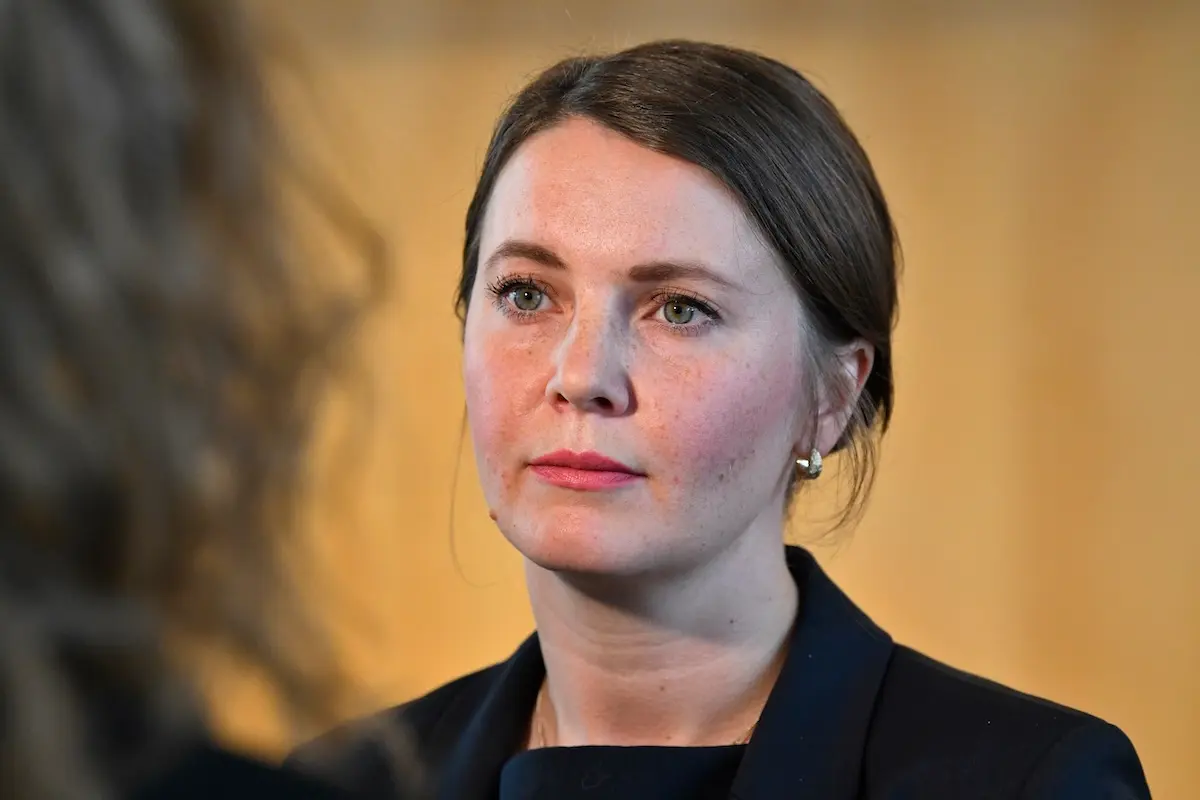
Niels Paarup-Petersen, immigration spokesperson for the Centre Party, said that his party had now committed to making the issue part of coalition negotiations if the opposition parties win a majority in the election on September 13th.
"When Tidö hopefully falls, we will take up in our discussions with any future government that transitional rules should be applied and reintroduced," he told The Local.
"Of course, it will be complicated, but as we've seen with teen deportations, if the Migration Agency sees that there is a strong possibility that new rules are coming that will affect people positively, they might not be eager to make decisions."
Ida Karkiainen, immigration spokesperson for the Social Democrats, said that her party also planned to make reintroducing transitional rules for citizenship a priority.
"If we gain government power in 2026, this is one of the most important things to do on Swedish migration law and of the Swedish citizenship legislation," she told Swedish public radio broadcaster Radio Sweden.
EDITOR'S PICK: Make your own Swedish government with The Local's election widget
Sweden's parliament on April 29th rejected a counter-motion backed by all four opposition parties which would have meant that people who have already applied for citizenship by the time new stricter citizenship rules come into force on June 6th would have their cases assessed under the rules in force when they applied.
The opposition motion was only defeated because the Sweden Democrats sent in two MPs to vote that they had agreed to hold back under the parliament's pairing system, a move that opposition parties have criticised as a form of cheating.
Karkiainen said that she hoped that most of the 102,000 applicants who would stand to benefit would still be waiting for a decision by the time a new government brings transitional rules into force. It was, she conceded, still unclear whether the new law could be framed in such a way to help those who have been rejected.
"We will see what we need to do in those cases, but hopefully there will not be so many cases that have got a decision during this short period of time."
Annika Hirvonen, migration spokesperson for the Green Party, said she struggled to see how a new law could be constructed which would help those rejected in the interim.
"It's hard to say how we should construct a law in that scenario," she told Radio Sweden. "What would be the fairest and how would it be possible to identify these cases that in that scenario were rejected already, but would have been eligible for another result had there been transition rules."

Comments (10)