

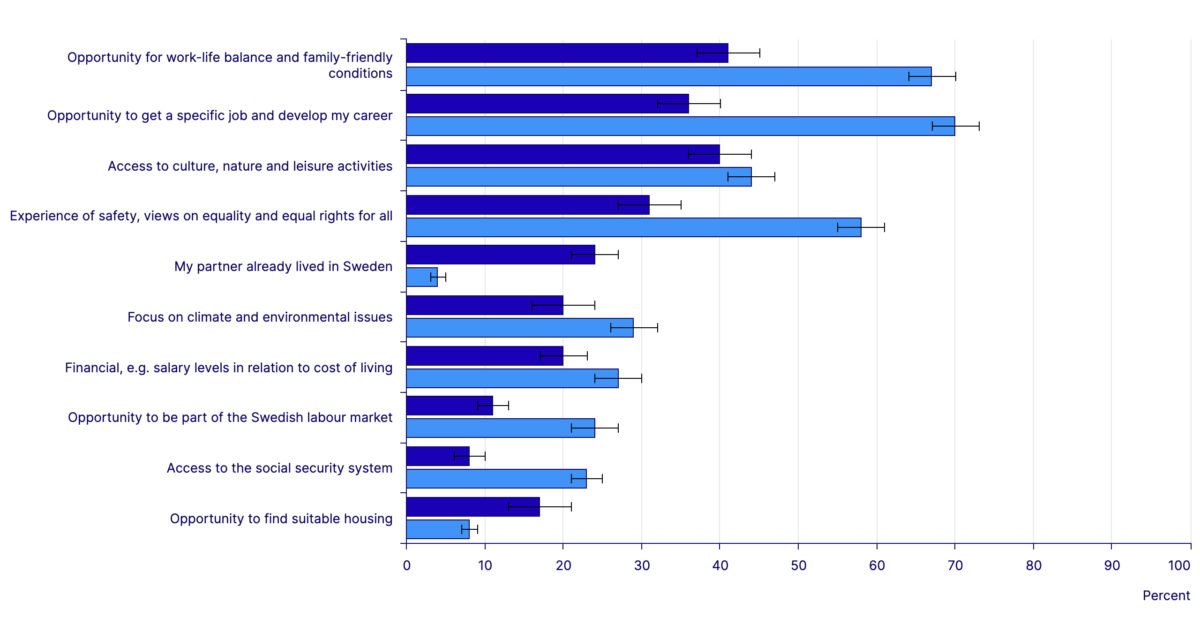
Some 67 percent of non-EU labour migrants who responded to the inquiry, carried out for Statistics Sweden, cited "opportunity for work-life balance and family-friendly conditions" as the most important factor behind their decision to come to Sweden.
This came second only to "the opportunity to get a specific job and develop my career", which was given as a reason by 70 percent of respondents.
Only 27 percent pointed to financial reasons, such as salary levels in relation to cost of living, and only 24 percent said they had been drawn by the "opportunity to be part of the Swedish labour market".
"We wanted to know why people wanted to come here, what helped them to establish themselves, and what reasons people had for leaving the country," Sinisa Sauli, the responsible statistician at Statistics Sweden, told The Local.
As well as work-life balance, he said third-country nationals also cited "safety, the view of gender equality and the principle of equal opportunities", which, he said, "indicates that broader social aspects play a central role in their choice of Sweden".
The report, produced by Statistics Sweden as part of the cross-agency government initiative "Work in Sweden", was based on 4,000 responses to an online questionnaire sent out to 17,000 labour market migrants in Sweden.
High skilled workers from the EU also cited work-life balance and family as Sweden's main attraction, with 41 percent naming it, followed closely by "access to culture, nature, and leisure activities", which 40 percent of EU high skilled workers ticked.
Why did people want to leave?
The majority of respondents aimed to stay in Sweden, with 77 percent saying they had no plans to leave in the coming 12 months, and only ten percent saying they were considering or had already decided to leave.
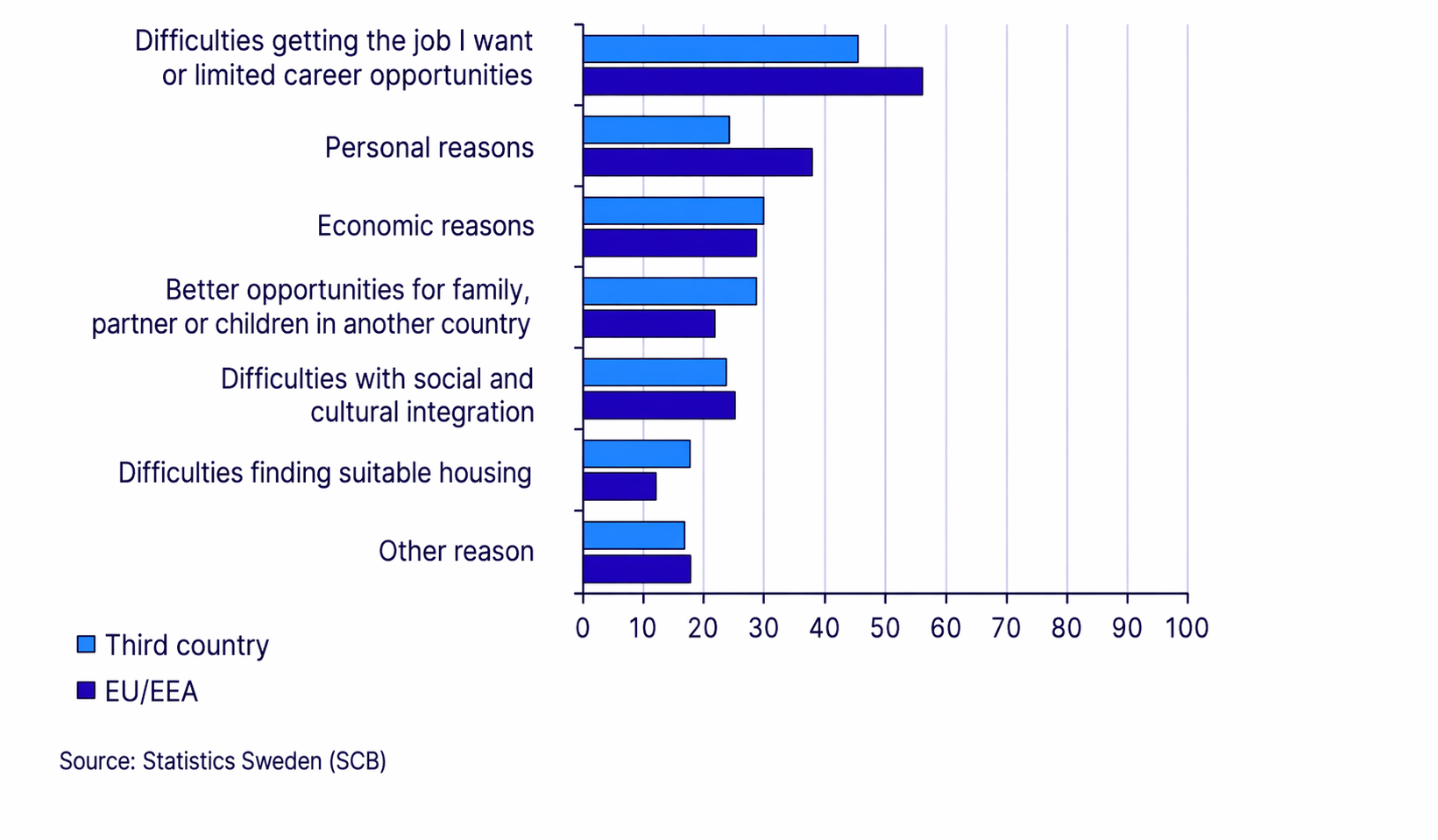
Around half of those who had decided to or were considering leaving gave "work and career opportunities" as their main reason, pointing to difficulties getting their desired job or limited career development opportunities. Around 30 percent cited "economic reasons", and others pointed to "personal and family reasons". Women from non-EU countries were the most likely to cite "social and cultural integration" as the reason for leaving, with 38 percent giving this as a reason.
Given the significant changes to Sweden's work permit regime that have taken place in recent years, issues with permits for the worker and their family played only a relatively small role, with 7 percent citing "difficulties with work or residency permits for me or my family" as a reason for leaving or wanting to leave Sweden.
A further 8 percent blamed "lack of security, views on equality and equal conditions for all".
View of government agencies
The inquiry also asked respondents to give their impression of Swedish government agencies, with most saying they had a favourable impression.
Close to 90 percent said they were "quite satisfied" or "very satisfied" with the Swedish Tax Agency, and over 80 percent said they were "quite satisfied" or "very satisfied" with the Swedish Migration Agency.

Comments (7)