
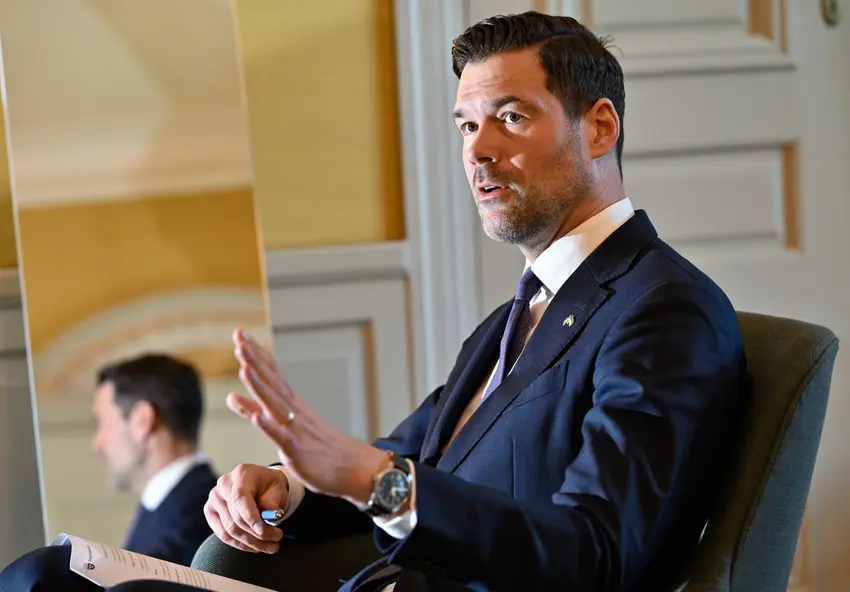
Forssell has been on what you could describe as a migration tour over the past few weeks.
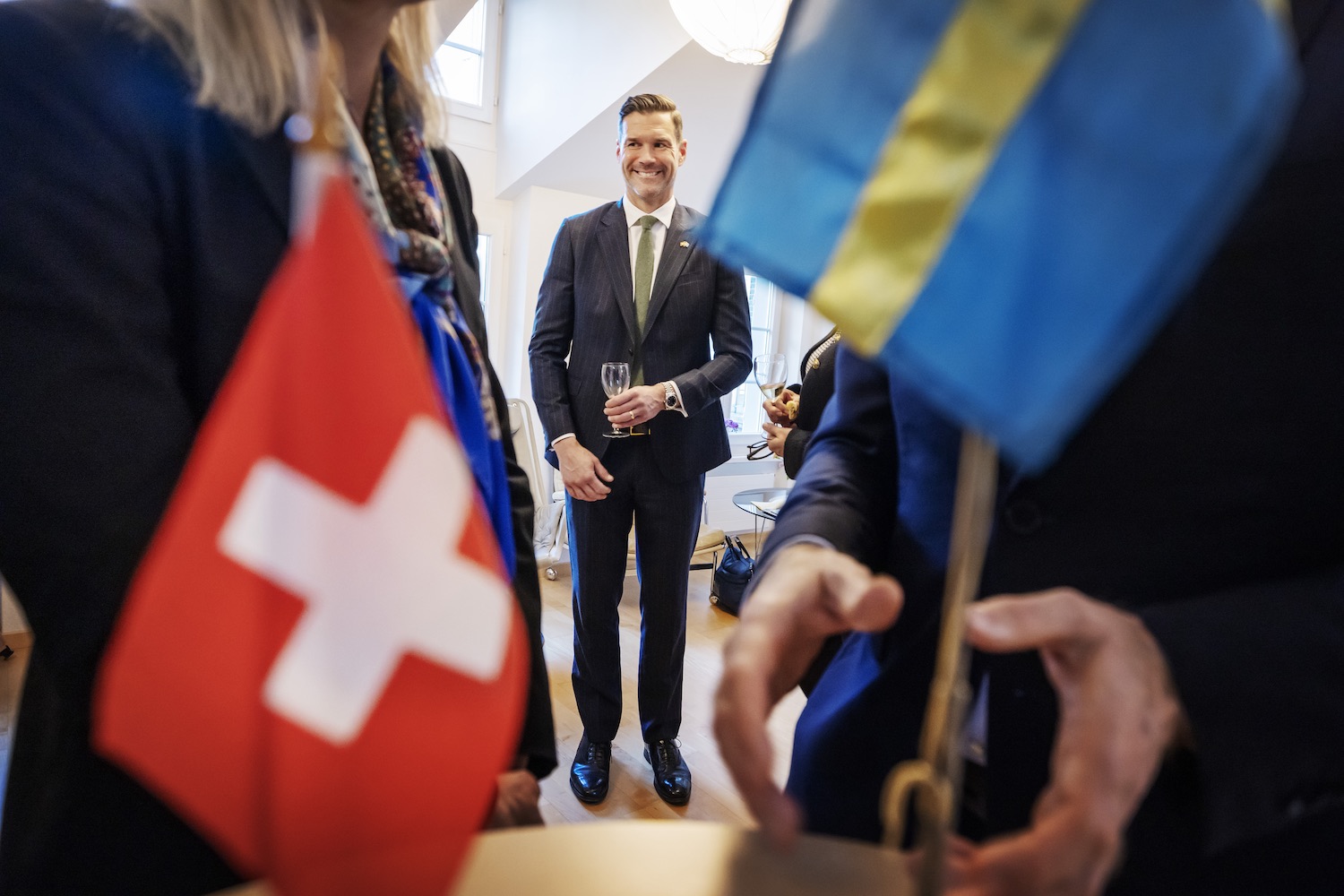
In April, he visited Finland to discuss how to attract highly-skilled workers (he visited Canada for the same reason last year), Switzerland to study their citizenship system and Gothenburg, where he visited the International House and took part in a round-table discussion with local business on how to attract foreign talent.
On May 7th, Forssell visited Skåne, stopping in at Region Skåne's International Office in Malmö to find out more about their work to help healthcare workers with foreign qualifications have their credentials approved to allow them to practise in Sweden, and to talk with those who have been through the process themselves.
That's where The Local met him for a sit-down interview, before his Skåne trip continued on to Landskrona.
We asked Forssell what he learned on his recent trip to Finland, and whether there are any policies there that Sweden is considering adopting.
"Well, first of all, I think it's important to bear in mind that we are already very attractive today – I've just listened to [the healthcare workers'] stories about why they ended up in Sweden. But having said that, we need to get even better in the future. In Finland, they have been working very actively and very strategically with this for quite some time. They have a bit of a different system."
Finland, he said, focuses on attracting talent from four specific countries: India, the Philippines, Vietnam and Brazil.
"So they have a kind of different perspective. We are open to talent from all over the world, but that was one of the things that we studied there."
If he had to choose one aspect of Finnish migration policy to take back to Sweden, he said it would be their method of handling work permits.
"They have a completely different system," he said. "If you're a highly skilled labour migrant in Sweden, you will basically go to the Migration Agency or Statens Servicecenter and you're standing in the same line as everyone else. And I think that's a bit odd, because even though asylum-related migration and labour migration are both examples of migration, they have very few things in common, if anything."
"This is weird and there must be a change," he said.
He said he was impressed by Finland's use of "International Houses", which also exist to some extent in some Swedish cities, as a one-stop shop for helping labour migrants resolve all sorts of issues, such as finding accommodation or applying for the correct residency permit.
"Being attractive is not only about having short waiting times, but also, you know, ‘what about schools for my kids?' and those questions are very different when it comes to asylum-related migration," he said.
"So to be clear, they have a system focusing only on labour migrants in Finland. I think that's interesting from a Swedish perspective, if there could be a system like that in Sweden as well."
But what about retaining talent? The government has received criticism in recent months for not doing enough to keep hold of those highly-qualified immigrants who are already in the country, such as those laid off by bankrupt battery company Northvolt.
"The situation regarding Northvolt is very problematic, needless to say, but we're working very intensively together with the local municipality there in order to help them in finding new jobs," Forssell said.
Laid-off work permit holders only have a three-month window from the end of their notice period to find another job, or they risk losing their right to live in Sweden. The opposition Social Democrats have called on the government to double this deadline to six months, which Forssell has previously said is not on the table, as it would require major legislative changes.
The Social Democrats are not the only group calling for a change to the law. They join the Centre Party and local representatives in Skellefteå, as well as The Local Sweden's editor, who proposed the idea in an opinion piece back in September.
When we asked if the government is considering extending this deadline, Forssell doubled down, arguing that the current rules are "fair".
"Under the current legislation, you already have the possibility to stay for another three months to find a new position," he said. "In reality, it's important to bear in mind that for most people, that period will be longer than three months, because it's from the date you leave the position, and what happens is that you're given notice that your position will cease to exist in a few months, which is what we've seen from Northvolt."
"But I mean, if you're going to be in Sweden, you need to have a job. That's the basic principle. For many of the people from Northvolt that won't be a problem because they are highly skilled, and we're investing heavily in trying to make it easier for them to find a new job, we're working with the labour agency and also some private initiatives. For some of the people, it might be more problematic."
"Still, if you are to have a legal permit in Sweden, you need to have a job, and there must be a balance here. I think today's balance is quite fair, because in reality we're not talking about three months, but perhaps five or six months."
This window can also be shorter than three months, if a permit-holder's permit is set to expire before the three-month period ends.
"But still, then you're aware of that from the beginning. You know your permit will cease to exist on a specific day," Forssell said.
We also asked Forssell more specifically about what the government is doing to help the highly-qualified foreigners already in the country find work.
"I think generally speaking, most people that do have a degree today or a diploma within their sector, of course there can be some challenges finding a job, which also has to do with the development of the labour market ... perhaps you will not get the kind of job instantly that you want to have. And I think that goes for most Swedes."
"You don't get your dream job instantly, but we're trying to put more focus on some of the challenges that we see on the labour market today. Making work pay, reduce taxes, making it more profitable to take a position. You need to start somewhere."
He admitted that there are concrete challenges for some industries, like difficulties in approving foreign healthcare qualifications to allow foreigners to practise in Sweden.
"More could be done there, but at the same time we also need to maintain our focus on patient safety. But to answer your question, I think the number one challenge for us today is to reduce the kind of bureaucracy that we're seeing, and I think that can be done."
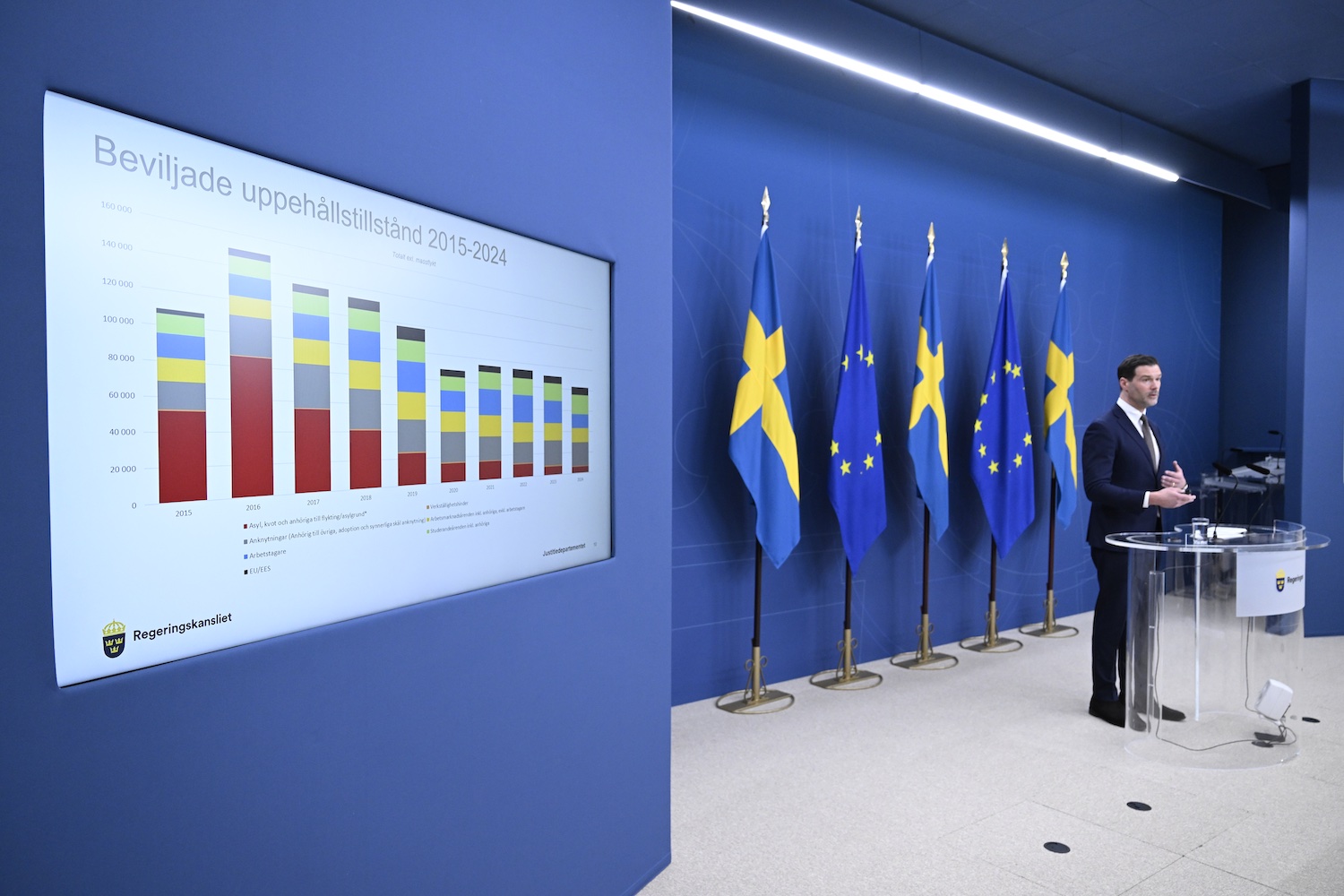
Forssell told The Local back in April that his government is working hard to attract highly-skilled workers. Despite this, the number of work permits granted to this group has actually fallen under the current government.
We asked if he considers that a success.
"Well, you can look at it from two different ways," he said. "I know that the number has fallen. At the same time [highly qualified workers'] share of the total work permits has actually increased. The number of work permits as a whole will also vary between different years, and that also has to do with the development on the labour market."
"In today's world with all the tariffs and all the international uncertainty, of course that will have consequences for the Swedish labour market too, but we are addressing this at the bad times. There will also be better economic times. There are many opportunities, but there are also some hurdles."
INTERVIEW:
Forssell told the Expressen newspaper in April that he plans to step up the government's efforts to make the country more attractive to labour migrants if he is still migration minister after the 2026 election. We asked him in our interview what concrete changes he would like to see.
"I think the process needs to be as smooth as possible," he said. "We need to continue to reduce bureaucracy. Frankly speaking, we've done a lot already, but more needs to be done, because our competitors are also doing better at this. But it's not only about that."
There also needs to be a focus on what happens before someone starts the process of moving to Sweden, Forssell said.
"I think Sweden is the best country on Earth, but most people, they don't know anything about Sweden or have very little understanding of us. So we need to spread the word about Sweden and all the fantastic opportunities here. There are a lot of things that need to be done in order to promote Sweden internationally."
"You could be talking to someone in India, or the Philippines, or to take one very current example, the States. I'm convinced that there are many people in the States today feeling that they should maybe go somewhere else and take up a position or continue doing research, but we need to promote Sweden [to them]."
This could be done by better using the resources Sweden already has at its disposal, Forssell said.
"It's about how we're using our embassy, our consulates all around the world, and the image of Sweden," he added.
This isn't the first time Forssell has mentioned a similar idea. Last year, when he was still foreign trade minister, he told the Swedish Institute to form a new "Team Sweden" group, focusing exclusively on boosting Sweden's international reputation.
"So for me, it's about two different things. When you've come to Sweden, making the process as simple and smooth as possible, but also before that: how do we get more people interested in Sweden? And I'm convinced that there's enormous potential there."
Comments (4)