
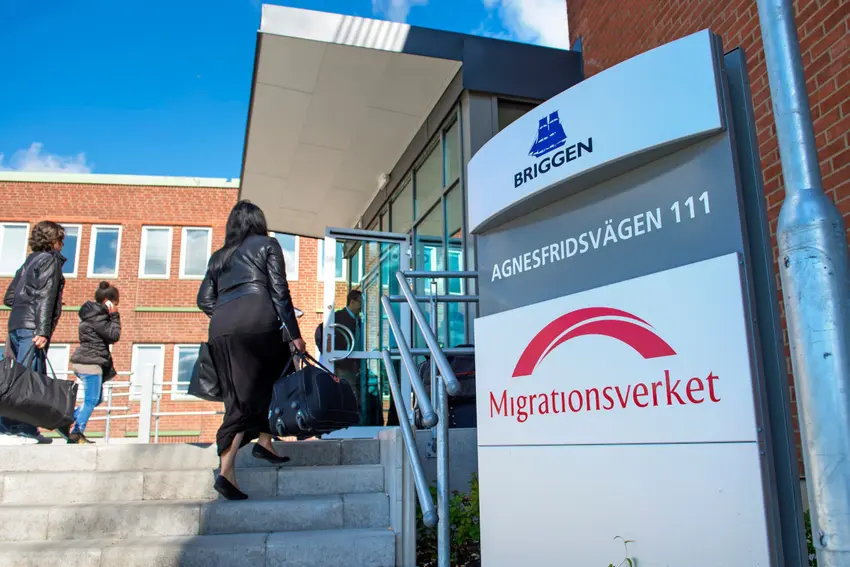
Many citizenship or permit applicants who are fed up with unreasonably long processing times for, especially, citizenship applications end up submitting a request to conclude to the Migration Agency – a way of fast-tracking your application by using your legal right to demand a decision.
Essentially, according to Swedish administrative law, if you’ve been waiting for at least six months for a decision on your citizenship application, you can submit a request to have your case concluded, which means the agency is given four weeks to decide on your case.
But is it worth your time?
Blanket rejections
The Migration Agency has complained in the past that processing requests to conclude is taking valuable time away from processing citizenship or permit applications, and the agency asked the government to no avail in 2023 to allow it to pause such requests.
Statistics provided to The Local suggest that the agency these days, instead of processing requests to conclude, almost automatically rejects them, at least in the first instance.
The agency received 47,338 requests to conclude between January 1st 2024 and March 20th 2025 in relation to citizenship applications alone. It has at the time of writing processed 45,054 of those requests to conclude, rejecting a full 99 percent of them.
“In the rejection letter it was written that this rejection is automatically sent to you by the system, meaning that the Migration Agency has not even looked at the case,” a software engineer working for Volvo Cars told The Local in a reader survey.
“I’ve submitted the request to conclude after no progress for over three years. I am an EU citizen and I thought it’s an easy and straightforward case. It was denied. They responded within 30 days but I didn’t know I could appeal,” wrote an IT analyst.
More than half of the roughly 70 readers who responded to The Local's survey had filed their requests to conclude to speed up specifically their citizenship applications, a category especially criticised for its long waiting times, which can range from weeks to years.
Appealing a denied request
Most people do appeal, and most of those appeals are upheld in court. Between January 1st 2024 and March 20th 2025, applicants won a total of 92 percent of all appeals of rejected requests to conclude. The courts then order the Migration Agency to make a decision on the citizenship or permit application as soon as possible.
“My appeal was granted by a judge two weeks after sending the letter. I had to wait another two months to get a letter from the Migration Agency asking for more details. And my passport. This was approved and I was granted citizenship two weeks later,” wrote Anthony, a software engineer from Stockholm, in The Local’s survey.
It was a similar story for Malcolm, a university professor: “It was denied, I appealed, the court sided with me, and a few weeks later the Migration Agency approved my citizenship application."
Walter, a retired architect from the US whose wife and children are all Swedish, also saw an end to his three-year wait for citizenship soon after filing a request to conclude and appealing the refusal.
Does a request to conclude speed up your case?
There’s a persistent rumour in immigrant circles in Sweden that even if your request to conclude automatically gets denied, it moves your application to the top of the pile. The Local asked the Migration Agency press office, which essentially confirmed the rumour.
“The Migration Agency’s ambition today is to process all cases where there’s a request to conclude. When a request to conclude is submitted in a citizenship case, the Migration Agency registers it and assigns the original case for processing as soon as possible. In most cases, the Migration Agency does not have the time to decide on the original case within the four weeks, as the majority of cases need additional information which doesn’t have time to arrive within the deadline,” said a spokesperson.
“A decision is therefore issued to applicants that their request to conclude is denied. If the person appeals, which most do, the court in most cases grants the appeal and orders the Migration Agency to decide on the case as soon as possible. It is not uncommon for the Migration Agency to already have processed the original application when the appeal is returned from court.”
Several readers were convinced that their case had been given higher priority thanks to submitting a request to conclude, even if the request itself was denied.
“It was very strange for me. My case was stuck for more than seven years, but a colleague at my university told me that he got his citizenship after he submitted such a request to conclude. I did the same and got two different letters at the same time. One letter was very hopeless and simply dismissed my request. The second one was a bit more personal with the case officer asking some questions, specifically about my whereabouts in the last five years, and requesting my passport,” said Vladimir in Gothenburg, who received his Swedish citizenship a couple of weeks later.
An assistant professor from Hong Kong wrote she chose not to appeal when her request to conclude was denied, just over a year after she sent in his first application for citizenhip.
“Then another two months later I received my citizenship. I believe I got a faster response as a result of requesting to conclude,” she wrote.
A university employee in Uppsala submitted her request six months after her application for citizenship.
“They denied the request, but two weeks later they asked me for my passport and some additional information to support my application. Around two weeks after that, my citizenship was granted. I think my application was definitely processed faster as a result of my request to conclude,” she wrote.
Anna, an HR director in Stockholm, is convinced her request to conclude expedited the process.
“It’s a funny story. I submitted the request, they asked for my passport and some follow-up questions via mail. Then four weeks later I received a letter that they were unable to conclude within four weeks so they denied the request. Then one day after I received the decision on granting the citizenship. I had been waiting for the decision for one and a half year before that,” she wrote.
Where requests to conclude fall short
However, while the request-to-conclude mechanism might help applicants in individual cases, the Migration Agency complains that it has been making long processing times worse by creating an addition set of processes case officers need to handle.
A report by Sweden's National Audit Office in March 2025 argued that the practice has led to a two-tier system, where applicants who file a request to conclude have their applications processed faster, but everyone else moves to the back of the queue, creating lock-in effects for several thousand applicants with no end in sight.
“The government has been made aware of the adverse consequences that requests to conclude a case have had for individuals, but has not taken any measures to rectify the shortcomings. The Swedish Migration Agency and the government have a joint responsibility in this respect,” said auditor-general Christina Gellerbrant Hagberg.
What are the risks for the individual?
Submitting a request to conclude doesn’t appear to harm your chances of having your citizenship or permit application approved – in other words you won’t be punished for trying to speed up the decision and you don't face a greater risk of rejection just because it's a quick decision.
That said, if neither your request to conclude nor appeal is approved, it means that you won’t be able to submit another one, as it can only be done once per application.
“My wife’s request to conclude was automatically denied after the maximum amount of time allowed. We appealed the decision but the Migration Court upheld the rejection, saying that it’s not unreasonable for the Migration Agency to need more than nine months in a simple case. We will probably never get a decision now. It’s infuriating,” said another software developer from Stockholm, who wished to be anonymous.
A senior software developer in Gothenburg sent in a request to conclude after about two years of waiting for citizenship. It was rejected, and after another two and a half years he hired a lawyer to take his case to court, which ruled in his favour.
“Four months later still nothing has happened and my lawyer has a hard time getting in touch with my case officer as she does not even answer during office hours. I’m approaching five years of waiting for citizenship. I’ve got a master’s degree and PhD from Chalmers and have worked for 10 years and lived here for 15 years. No word can describe my disappointment. This is not how you treat productive people,” he wrote.
Yuri from Russia, a director at a Swedish IT company, said his request to conclude was rejected both by the Migration Agency and the court, despite having waited two years.
“I’ve worked continuously at the same job the entire time I’ve been in Sweden, with no interruptions. I’m in a highly qualified profession and have consistently maintained a high income. Yet, almost everyone I know who arrived after me has already received their citizenship – even those with more complex situations involving unemployment or multiple job changes. I would really appreciate some transparency. It genuinely feels like my case has been lost somewhere and no one is actually processing it,” he wrote.
Although most readers felt that their requests to conclude had helped fast-track their case, some told The Local that it hadn’t led to anything concrete at all for them.
A product development engineer from India wrote that he had won his appeal, but the Migration Agency had still not processed his permanent residency application.
“Now it has been almost eight months and I am still waiting for a decision. I feel the court decision is just a piece of paper. I came to Sweden as a highly skilled employee and work for Scania, a reputable company, but I feel like I am stuck here,” he wrote.
A chef and business owner also said his successful appeal had been ignored.
“Unlike some friends and colleagues who had the same process and got a decision in two or three months, mine has been a year and two months now and they have not obeyed the court order,” he wrote, adding that he had been in Sweden for 12 years.
Comments (5)