
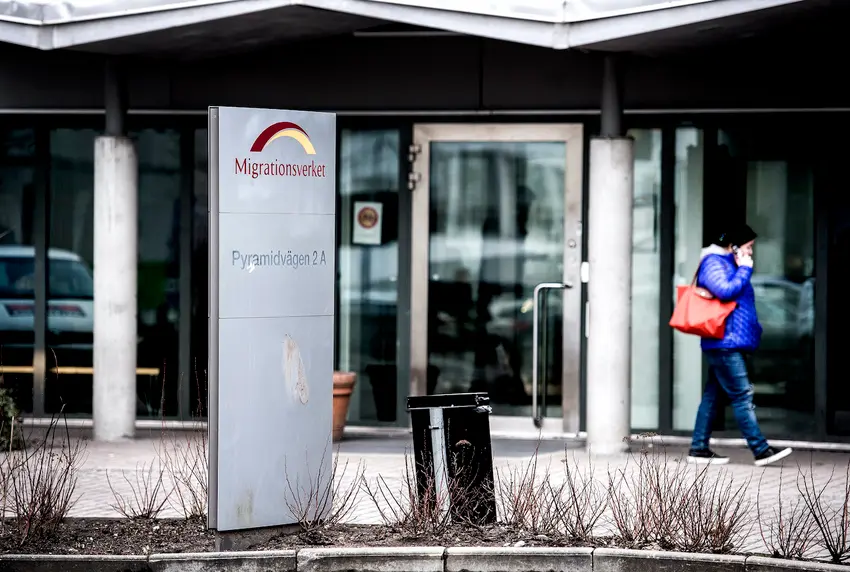
Earlier in January, the inquiry proposed a range of citizenship reforms, including extending the residency requirement for citizenship from five to eight years, introducing a self-sufficiency requirement, tightening up requirements that applicants have an "upstanding way of life" and almost doubling the application fee for citizenship, raising it from 1,500 to 2,900 kronor.
At the time of writing, The Local's non-scientific survey on readers’ reactions to the government’s plans to tighten up citizenship rules had over 230 responses.
Of those, 20 percent were from people with Swedish citizenship, while 80 percent of respondents were not Swedish citizens.
Opinions were divided on the government’s decision to increase the application fee. A quarter of respondents said it was a bad idea, 32 percent said it was a good idea, while the largest number, 42 percent, were undecided.
CITIZENSHIP REFORM:
- Swedish inquiry proposes almost doubling fee for citizenship
- KEY POINTS: Sweden's plans for tougher citizenship rules
- Swedish government inquiry proposes increasing citizenship wait to eight years
- Readers' questions answered on Sweden's citizenship reforms
‘Creates a burden for legitimate highly skilled people who already pay taxes’
Hassan Muneer, a freelance IT consultant from Pakistan, was among those against the raised fee.
“A higher fee won’t restrict people from applying,” he said. “Instead, it creates a burden for legitimate highly skilled people who already started paying taxes from the day they landed in this country.”
“Give some respect to them, Sweden didn’t invest a penny in their education. Either their parents invested in them or they took loans from their home country.”
Another respondent, a 29-year-old woman based in Stockholm, described the new fee as “rude”.
“Why make people pay so much? We already have a lot to pay for, like taxes.”
According to Kirsi Laakso Utvik, head of the inquiry into tightening up citizenship rules, the higher fee will be used to fund the reforms. The specific amount was determined by looking at how much the fee would have increased if it had risen in line with inflation.
“I don’t see a big problem with this,” wrote an American game developer in Stockholm. “It’s fine to increase the costs if it costs more to update applications.”
“The processing fee should be indexed to inflation, so the time was ripe for a change,” wrote Pratinav Gera, a 36-year-old product manager.
‘Not an unreasonable amount of money’
In an international context, Sweden’s fee – even after the hike – is still rather low. At 2,900 kronor, or roughly 250 euros, it’s lower than Denmark’s (currently around 530 euros, soon to rise to 800), Norway’s (roughly 555 euros), the UK’s (almost 2,000 euros) and Ireland’s (950 euros if approved).
One reader who is considering moving to Sweden from France, where the application fee for citizenship is just 55 euros, wrote that “even [Sweden’s new] level is very low”.
“There are administrative costs which must be met,” she said. “I don’t see this as insurmountable.”
“It seems fine at first glance,” agreed Mal in Västernorrland. “It is not an unreasonable and lifechanging amount of money, especially for the scale of what it can lead to.”
‘Good if it means shorter waiting times’
The Migration Agency has been criticised in the past by Sweden’s Parliamentary Ombudsman for “unreasonable” waiting times in citizenship, asylum and permanent residency cases.
It is common for citizenship applicants to wait for years for their application to be approved – the current waiting time listed on the Migration Agency’s website is a whopping 30 months, or two and a half years.
A respondent named Alexander said that the increased fee would be “good as long as it means shorter waiting times”.
“I don’t mind increasing the cost,” wrote Ben, an engineering manager in Stockholm. “But I expect improvements to efficiency in the process as a result of that.”
“Earlier fees were low and the Migration Agency will get some additional financial support,” wrote Suresh in Gothenburg.
Another respondent, who wished to remain anonymous, said that they expect better service from the agency if the fee is raised.
“The price keeps increasing and the quality of service keeps declining quickly,” they wrote. “Another measure from the far-right to take away rights and money from immigrants, which are now the scapegoat of the government.”
‘Perhaps they need to be income related’
A respondent in his 50s originally from Australia was undecided on whether the new fees were a good idea or not.
“Determined individuals will usually find a way, but there must also be some consideration given to those without the means to afford such fees, such as genuine refugees who have lost everything.”
“Perhaps the fees need to be income related like speeding fines in Finland!”
The fees are not tied to income, although stateless applicants and refugees will not need to pay.
A writer based in Västra Götaland who was also undecided on the fee hike echoed the Australian respondent’s sentiments.
“If the rise in price is to actually make the citizenship process better and more efficient then it would be good, if not and it's just intended as yet another barrier to low-income potential citizens, then no.”
Sharrilyn Helgertz, an American living in Malmö, wrote that the new fee is “unfair”.
“This fee disproportionately hurts the ones who can least afford it.”
“Provisions for low-income applicants could ensure fairness and accessibility,” agreed Aurora Abram, a research coordinator in Stockholm.
How did respondents feel about some of the other planned reforms?
An overwhelming majority of respondents – 77 percent – thought that extending the residency requirement for citizenship from five to eight years was a bad idea, while just 19 percent said it was a good idea. The remaining 4 percent were undecided.
Despite the similarity of these numbers to the figures on Swedish citizenship above, 19 of the 43 respondents who said extending the residency requirement was a good idea were Swedish citizens, while 24 were not.
The majority of respondents – 61 percent – thought that a self-sufficiency requirement for citizenship applications was a good idea. Just over a fifth, or 21 percent were undecided, while 18 percent thought it was a bad idea.
Most respondents were also in favour of the government increasing the requirement for potential citizens to show they’ve had an upstanding way of life, with an overwhelming majority, 78 percent, in favour. Only 10 percent of respondents were against the proposal, with 12 percent undecided.
MORE ARTICLES FROM THE SAME SURVEY:
- How do foreigners feel about extending Sweden's citizenship wait to eight years?
- Readers largely in favour of self-sufficiency requirement for Swedish citizenship
The Local will publish more articles in the coming days to share our readers' comments on these issues.
Thank you to everyone who took the time to respond to our survey. We received hundreds of replies and couldn't include everyone's comments, but we tried to pick a representative sample. We read all comments and they will help inform our future coverage.
Comments (2)