
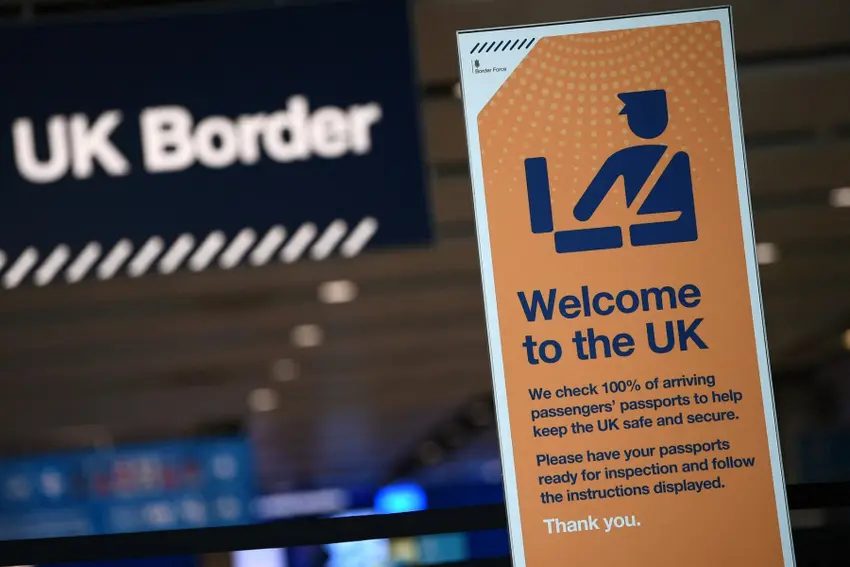
The UK's new ETA visa waiver scheme is now entering its third and final phase - affecting EU citizens travelling from France. The new visa-waiver will be compulsory from Wednesday, April 2nd.
ETA stands for Electronic Travel Authorisation and it is essentially entry permission that visa-free travellers like tourists need to apply for online in advance of their trip to the UK.
It costs £10 (although this rises to £16 from April 9th) and lasts two years, allowing multiple entries to the UK while it is valid.
It is similar to the EU's proposed ETIAS visa waiver (although that has no confirmed start date) and is modelled on the US's ESTA visa waiver - it is required for all types of travel including tourism, short stays and family holidays.
Who?
The UK opted for a phased start, depending on the nationality of the traveller - the rollout began in 2023 for nationals of Bahrain, Kuwait, Oman, Qatar, Saudi Arabia and the United Arab Emirates.
Since January 8th 2025 it has also been required for all non-EU nationals arriving into the UK (with the obvious exception of UK nationals). This would include, for example, Americans, Canadians, New Zealanders, Australians, Brazilians, Indians, Japanese and all other non-EU/EEA countries.
Then from April 2nd, the requirement is extended to all EU and EEA countries - Andorra, Austria, Belgium, Bulgaria, Croatia, Cyprus, Czechia, Denmark, Estonia, Finland, France, Germany, Greece, Hungary, Iceland, Italy, Latvia, Liechtenstein, Lithuania, Luxembourg, Malta, Monaco, Netherlands, Norway, Poland, Portugal, Romania, San Marino, Slovakia, Slovenia, Spain, Sweden, Switzerland and Vatican City.
From April 2nd only people travelling on a UK passport or an Irish passport are exempt.
Where?
The visa waiver is required for any traveller entering the UK, with entrants from Ireland, Guernsey, Jersey or the Isle of Man the only exceptions.
It would therefore include all entries from France.
It is required for all types of travel - by air, sea or rail.
Exemptions
As mentioned above, people travelling on UK or Irish passport are exempt.
Also exempt is anyone who holds a visa/residency status for the UK or EU nationals in possession of Settled Status or pre-Settled Status in the UK.
All other travellers will require one - even if they are only making a short visit. For example American tourists in France who decide to hop on the Eurostar for a weekend in London would need one. So would any French people planning a trip to the UK from April 2nd.
There are no exemptions for people who are married to a UK citizen, neither are there exemptions for under 18s or over 70s. Children and babies will require one, even if they are travelling with their parents.
In the initial version of the law, airline passengers who are simply transiting through the UK did need one - however the UK government has now backtracked in the face of fury from the aviation industry and said that transit passengers do not need one.
School pupils travelling from France on an organised trip will not require an ETA, due to a bilateral UK-France deal, but the school will be responsible for sorting a group entry permit for the class.
How to get one?
The key thing about ETA is that it must be applied for in advance, with applications done online or on the UK ETA app.
The UK government says that applications will normally be processed within three working days, but sometimes this may take longer. In the days leading up to the launch, users reported long queues to access the website - the UK government says that "you can travel to the country while awaiting a decision".
The ETA lasts for two years - during that time you can make multiple trips to the UK. If your passport is renewed during that time period, you will need to apply for a new ETA.
You cannot make group applications - each person in a group needs their own ETA, but you can make the application for another person.
Find the UK government website HERE.
The ETA is intended for short visits such as holidays and family stays - it does not allow people to stay in the UK for more than 180 days or to work in the UK.
What about dual nationals?
The picture for dual nationals has been complicated by contradictory advice from different UK government sources and an apparent glitch in the ETA app.
In effect, the system seems to force British dual nationals to use their UK passport to travel - even though there is no provision for this in law - and this is the advice that has been given by some UK government sources.
In general the advice is that it will probably be simpler to travel on your UK passport - if it is valid and in-date. British dual nationals whose UK passport is expired face a confusing situation and contradictory advice - full details here.

Comments (5)