
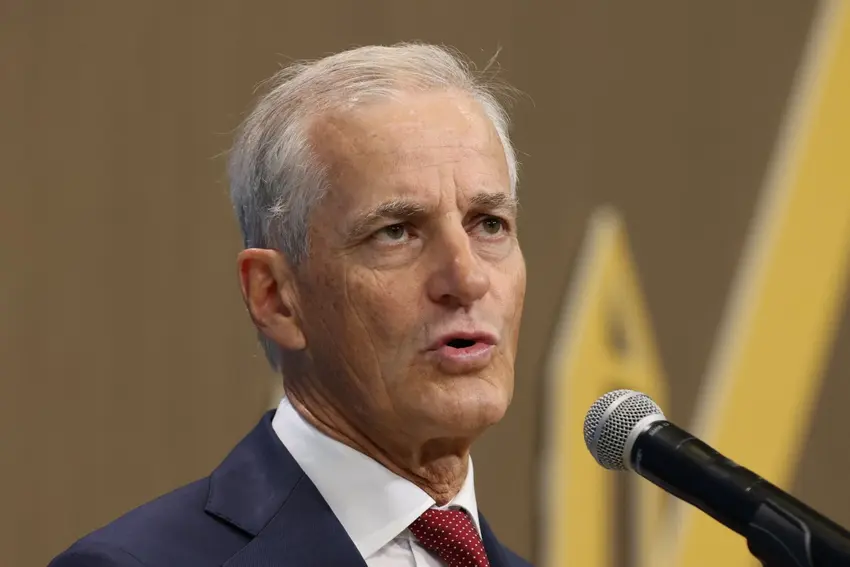
Pressure on Jonas Gahr Støre has increased, and the Labour Party leader and prime minister has faced calls to resign this week.
Broadcaster TV 2, public broadcaster NRK, and tabloid newspaper Dagbladet have all reported this week that party officials have called for a change of leadership.
Several Labour Party MPs and officials have called for Støre's marching orders on record, too.
“We have seen a development over time where it [popularity] has gone down, that is a fact. I have great respect for Jonas and the job he has held for many years. But when it all comes down to it, I think we are at the point now that a change of leadership is necessary, and that Støre resigns,” Labour MP Stein Erik Lauvås told the newspaper Aftenposten.
Why is he under pressure?
Essentially, Støre has been a deeply unpopular PM. Several recent polls have given Norway’s Labour Party dwindling levels of support among voters.
One of the more recent polls for broadcaster TV 2 showed that Labour, historically Norway’s largest party in terms of voter share, would receive just 16.5 percent of the vote if an election were held at the time of polling.
This spells bad news for Labour and the other party in the current minority coalition government, the Centre Party, ahead of an election next year.
Støre's time in charge has not been easy as he inherited the tail-end of the pandemic before later having to deal with a cost-of-living crisis and the outbreak of war in Ukraine.
While these things have made things challenging for the government, it also hasn’t helped itself and the PM has had to replace around half his ministers due to scandals.
The scandals have been numerous, including affairs, exploitation of tax-payer-funded accommodation, plagiarism, falling afoul of share-trading regulations, and accusations that ministers had appointed friends and acquaintances to public boards.
READ ALSO: Why Norwegian politics has been hit by so many scandals
Not all the ministers who have resigned belonged to the Labour Party, although some of the PM’s key allies were among the casualties.
The emergence of a potential leadership rival in former education minister Trond Giske has also cranked up the pressure on the PM from within the party. Some commentators have even said Giske’s return to top-level politics signalled the beginning of the end for Støre.
Could Støre resign?
Støre has said he plans to weather the storm and steer the ship to calmer waters.
“I am aware that it is a serious situation. I take it seriously, but my message back to the party members is that I am motivated for that job and to be part of the team that will reverse that development,” he told public broadcaster NRK’s Politisk Kvarter politics show on Tuesday morning.
Party officials may try and force Støre out in the new year, and before April next year when the party will host its annual conference, TV 2 reported on Monday. Still, TV 2 and other outlets have reported that the situation was sensitive and nothing had definitely been decided.
Alternatively, Støre may convince the dissenting voices that he can turn things around and that it would be best to put on a united front ahead of an election next year, which is likely to see the current government lose significant ground to not only the Conservative Party but also the right-wing populist Progress Party.
Who could take over?
Giske is a controversial figure and polarizing figure within the Labour Party. He chose not to run as an MP during the 2021 general election after previously resigning as one of the party’s deputy leaders amid a MeToo scandal.
Instead, TV 2 and other outlets reported that jobs minister and deputy leader of the party, Tonje Brenna, would be the likeliest candidate to take over.
However, she told reporters on Tuesday that she would not challenge Støre and was happy with him as leader.
"I work well and closely with Jonas every single day. He has my support, and it will continue like that," she said.
Comments (1)