
Here's the Rome international school that puts wellbeing first
Today’s children and adolescents face challenges unimaginable to previous generations in an increasingly connected and noisy world. For international students, these pressures are even greater, making wellbeing essential. Here’s how one international school in Rome is adopting a whole-school approach to keep its students happy, healthy, and focused.
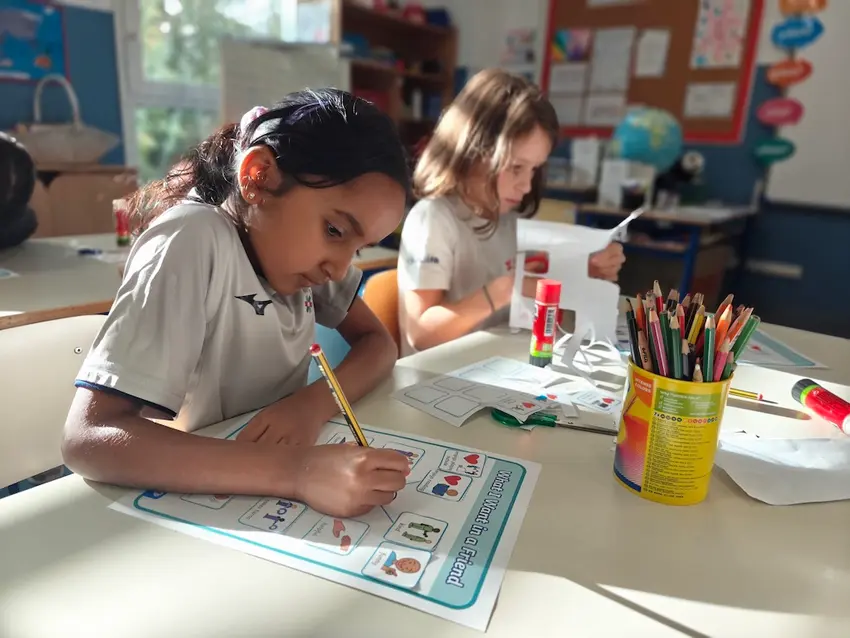
Rome International School (RIS) offers a comprehensive education from preschool through high school at its Monte Mario campus, northeast of Rome. As part of the Globeducate network of international schools, RIS consistently ranks among the city’s top educational institutions. With a mission to “prepare and empower students to succeed in a rapidly changing world,” RIS places student wellbeing at the centre of its educational approach.
As an renowned international school, developing resilient and inquiring learners is a priority for RIS. To fully deliver the offered International Baccalaureate and Cambridge IGCSE Programmes to their full potential, wellbeing needs to be embedded at every level.
In light of the unique challenges faced over the past decade—COVID-19, global conflicts, and an ever-louder digital presence—RIS has reinforced its commitment to a whole-school approach to wellbeing. This initiative is led by Rhiannon Phillips-Bianco, who serves as both an elementary school teacher and Globeducate’s Head of Wellbeing.
‘Listening was my first priority’
Upon assuming her role as Head of Wellbeing for both the school and the broader Globeducate network, Rhiannon recognised that involving students and staff was essential to establishing this new approach. Her first step was to engage the staff, ensuring they felt included and valued.
“Listening was my first priority,” she says. “I invited all staff, not just teachers, to join a wellbeing team. It’s composed of representatives from various age groups, including our kindergarten teacher, a senior school English teacher, and pastoral leads, creating a true cross-section of voices."
“All students from Year 2 to Year 13, and all staff, were also given the opportunity to complete a wellbeing survey to share their views.”
More importantly, students were invited to join as ambassadors—not only to share their experiences but also to act as visible champions for wellbeing. “We have 14 student wellbeing ambassadors from Year 7 to Year 13, each term tackling a project related to our wellbeing theme. This term, they’ve organised a digital wellbeing poster competition to raise awareness among their peers.”
See how Rome International Schol prioritises student wellbeing from ages 2 to 18
At its core, the school’s approach to wellbeing draws on the work of American psychologist Martin Seligman, whose positive psychology emphasises finding meaning and fulfilment in life rather than merely addressing problems as they arise.
Rhiannon explains, “We use a positive psychology approach focused on fostering positive emotions, engagement, relationships, a sense of meaning, and accomplishments and health (both physical and mental). Our programme continually evolves to proactively support everyone’s wellbeing—not just the one in four who struggle but to raise awareness so that everyone knows what to do if they face challenges.”
This wellbeing framework is integrated into the daily life of the school, with a key figure being a professional school counsellor who support students through a ‘Listening Centre.’
Rhiannon elaborates, “We have a school counsellor, who is a psychologist, coming in two mornings a week for students with more serious issues that we can’t fully support in-house. We refer students to him when needed, while the rest of our wellbeing team is available daily in our Listening Centre to provide ongoing support and address immediate concerns.”
Apart from the school's professional counsellor and wellbeing staff, students also know they can approach any staff member with their concerns. Rhiannon notes, “For younger children, the class teacher is often the first point of contact. For older students, we encourage them to go to their form tutor, as this is the teacher they see every day. Some students might also choose a subject teacher they connect with, such as their music or art teacher.”
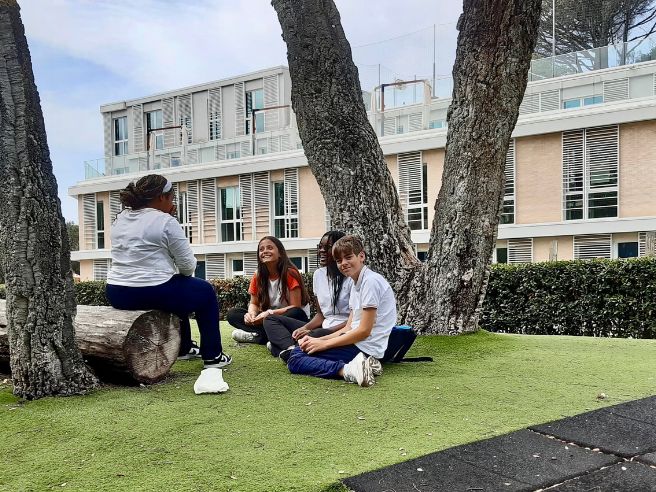
Rhiannon often takes the opportunity to speak with students personally. “On Fridays, I hold a ‘Walk and Talk’ session with middle and high school students. Walking outdoors often helps students feel more comfortable and willing to open up, providing a different kind of support than a traditional sit-down conversation.”
Regular pastoral assemblies and form activities take place on a weekly basis, offering students a number of strategies for reinforcing their own wellbeing and resilience when faced with everyday stressors and obstacles.
The multifaceted approach even extends to the design of classrooms, with ‘Calm Corners’ being introduced in Early Years and Elementary classrooms. Rhiannon explains, “All elementary classrooms now have a calm corner, a quiet space for children needing a moment of peace. It’s about listening to student feedback and understanding that everyone may feel overwhelmed at times.”
‘It becomes part of their language’
The program focuses on one key theme every term. This year they are Digital Wellbeing, Healthy Relationships and Self-Esteem.
All staff receive training, and practical strategies are shared weekly, for each theme so that conversations about wellbeing are a natural part of day-to-day school life.
Many students wholeheartedly embracing the program.
“Elementary children are absolute sponges, really open to wellbeing concepts—they soak it up, and it becomes part of their language.”
Older students may take longer to come on board, but Rhiannon sees this as an opportunity to raise awareness of mental health issues.
“With teenagers, there’s usually a group that’s really engaged, and another that needs more time to see the value. Over time, though, that changes as wellbeing becomes part of the culture,” she states.
“Some older students were initially dismissive, saying, ‘I’m fine. This is all irrelevant to me. I never have a problem with my mental health.’ I explained that one in four people will struggle with mental health at some point in their lives, so if it’s not them, it might be a friend or family member. Empathy for others is just as important as looking after ourselves.”
Survey data speaks volumes. Between September 2022 and May 2023, there was an increase of over thirty percent in the number of students who agreed or strongly agreed with the statement: ‘I have been taught strategies to use if I am upset or worried.’
Next steps
With early signs of success in improving student wellbeing, the RIS experience still has time to evolve—and the lessons learned could benefit other schools across the globe.
“A global wellbeing curriculum doesn’t really exist for international schools. Programs from the UK or the US don’t fully address the unique transitions and cultural challenges our students face.
“It is for this reason that we are developing a bespoke program, responding to the unique needs of our community, recognising that these are constantly changing..”
This content was paid for by an advertiser and produced by The Local's Creative Studio.
Join the conversation in our comments section below. Share your own views and experience and if you have a question or suggestion for our journalists then email us at news@thelocal.com.
Please keep comments civil, constructive and on topic – and make sure to read our terms of use before getting involved.
Please log in here to leave a comment.
Comments (1)