
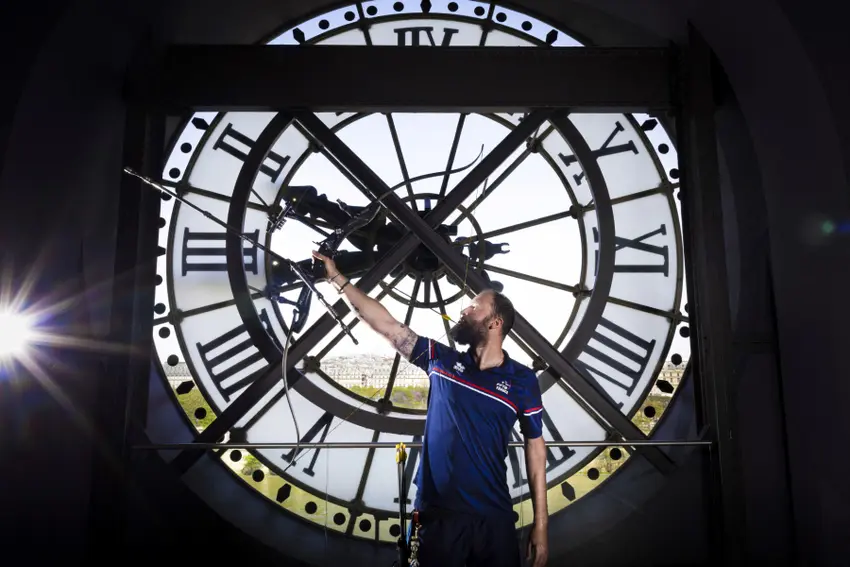
On the morning of Sunday, October 27th, people across Europe will turn the clock back by one hour, leading to lighter mornings and darker evenings.
This means that people will gain an hour of sleep on Sunday - good news if you've been to an early Halloween party - and marks the end of daylight savings time.
But wasn’t this supposed to change? What happened to the idea circulated in the European Union some years ago of no longer having these twice-yearly seasonal time changes?
The most successful public consultation
In 2018, the European Commission launched a public consultation asking people what they thought of scrapping the time changes.
It was the most successful EU consultation ever: 4.6 million people participated, in some cases representing a signification portion of the national population (3.79 per cent for Germany and 2.94 per cent for Austria).
People overwhelmingly said they wanted to stop moving the clock back and forward every six months - in fact 84 per cent of respondents agreed with the proposal.
Negative health impacts, including sleep disruption, the lack of energy savings and an increase in road accidents were the most common reasons to justify the idea.
On that basis, in 2018 the Commission proposed legislation to end seasonal clock changes. This had to be approved by the European Parliament and by national governments represented at the EU Council.
The European Parliament in 2019 supported the proposal by a large majority suggesting time changes should be scrapped in 2021.
But EU governments could not find an agreement. Should summertime or wintertime become the norm? How to coordinate the change among neighbouring countries to avoid a patchwork of different time zones? And who would benefit the most?
Brexit and the pandemic also got in the way. With the UK leaving the bloc and unlikely to follow new EU rules, abolishing time changes would have left the Republic of Ireland and Northern Ireland in different time zones for half of the year.
In some countries, support for the idea was also flimsy - in Cyprus, Greece and Malta less than half of participants in the consultation agreed.
The last time the matter was discussed at the EU Council was in December 2019. Countries then called on the European Commission to produce an “impact assessment” of the proposal before being able to decide. Then Covid-19 hit and the pandemic overshadowed the discussion.
Why changing time?
Time changes, adopted by some 70 countries, have a long history.
Daylight saving time (DST) was introduced in several countries, including Germany, France and the UK, during World War I to save energy by delaying switching the lights on in the evening.
The arrangements were abandoned after the wars but were revived in the 1970s to deal with the oil crisis. Italy introduced daylight saving time in 1966, Greece in 1971, the UK and Ireland in 1972, Spain in 1974 and France in 1976.
Since 2001, an EU directive obliges EU member states to move the clock forward by one hour on the last Sunday of March and backward on the last Sunday of October. Earlier in the 1990s countries were changing time on different dates, with complications for transport, communications and cross-border trade.
But today does the system really ensure energy savings?
Several assessments have found that the benefits are ‘marginal’. One study estimates energy savings at between 0.5 per cent and 2.5 per cent, also depending on the geography, climate, economic and cultural factors of the country.
Generally, it seems that southern countries benefit the most, although gains are potentially diminished by technological advances, such as energy efficient devices. In other words, there is not just one factor to consider and results achieved in some countries do not necessarily apply to others.
What happens next?
The debate on seasonal time changes was somewhat revived due to the energy crisis. In March 2022, the US Senate passed a bill to make daylight saving time permanent from November 2023, although it still hasn't been fully ratified.
In summer 2022, reports in Italian media suggested the discussion could resume in the EU too.
However, a spokesperson for the EU Council recently told The Local there is nothing new on the agenda.
“The Council has not yet formed its position on the Commission’s proposal,” he said in an email.
However in March 2024 the chair of the European Parliament internal market committee - German Green MEP Anna Cavazzini - urged EU member states to come to a common position on the matter, at last.
"At the end of this legislative period, it is unfortunately clear that the abolition of the time change has become a non-starter in the Council," she said.
"In order to avoid further frustration, the Council must finally untie the Gordian knot of the member states' divergent opinions and take a position.
"This means we can finally make progress with ordinary legislation. The time between the European elections and the Commission's new work program would leave enough room for this this summer. In this way, the EU can keep the long-overdue promise to abolish the time change.”
At the time of writing, however, the Gordian knot remains tangled.
In 2024, the switch to summer time happened at 2am on Sunday, March 31st, clocks will then change again on Sunday, October 27th, this time moving back by one hour.
This article was produced in collaboration with Europe Street news.
Comments (10)